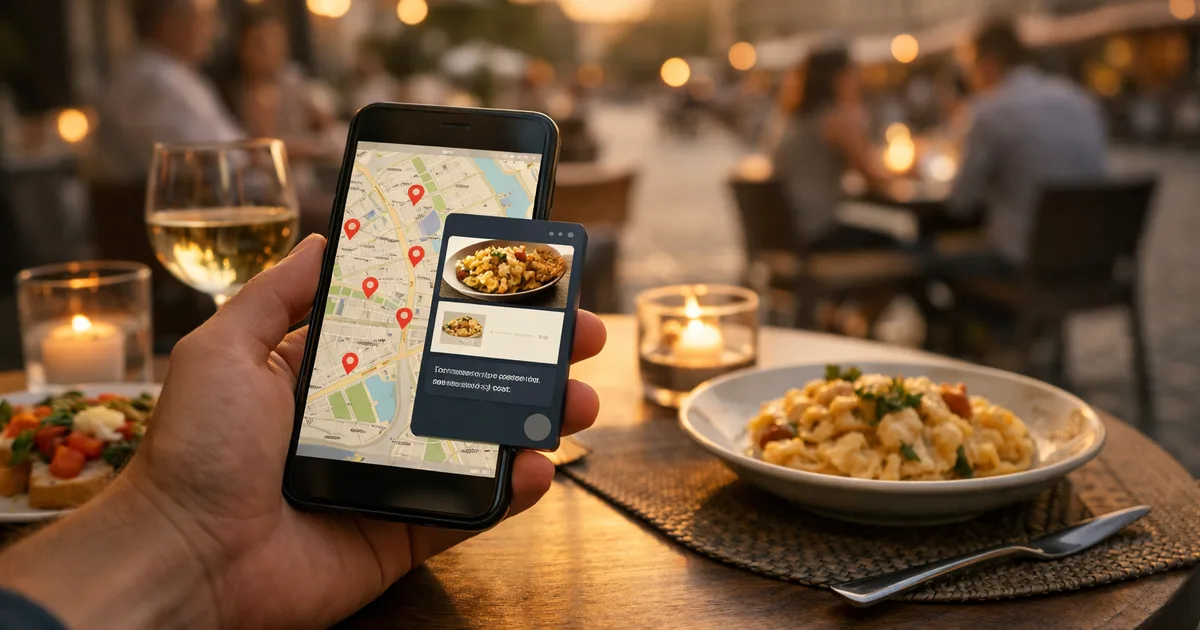
Virginia's Updated Allergen Rules Are Live — Sesame Added and QR Codes Approved for All Food Establishments
Effective September 10, 2026, Virginia requires all food establishments — restaurants, food trucks, and temporary vendors — to disclose nine major allergens in both packaged and unpackaged food. QR codes are explicitly named as an approved disclosure method under the updated regulations, which also add sesame to the state's allergen list.

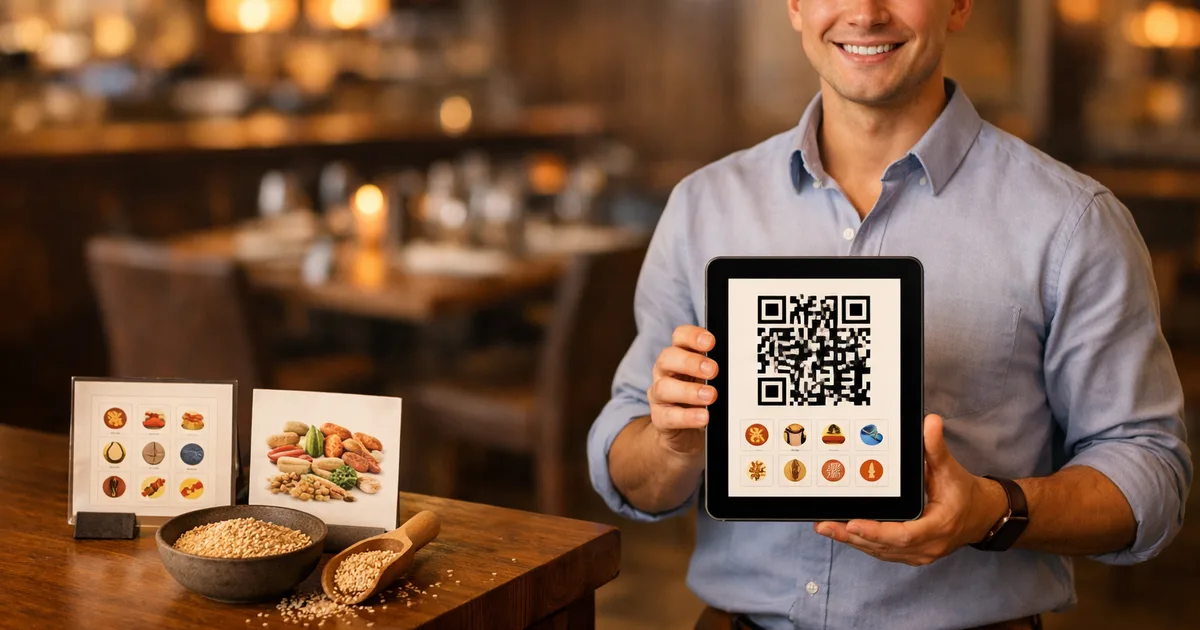
Virginia’s updated food regulations took effect on September 10, 2026, making the state the latest to tighten its restaurant allergen requirements — and one of the first to explicitly name QR codes as an approved disclosure method. According to the Virginia Mercury and the Virginia Department of Health, the changes apply to all food establishments in the state, from single-location restaurants and food trucks to temporary vendors.
TL;DR
- Effective: September 10, 2026
- Who: all Virginia food establishments — restaurants, cafés, food trucks, temporary vendors; no size threshold
- What: disclose all nine major allergens (sesame newly added) in both packaged and unpackaged food
- How: allergen text or icons on the menu, a standalone handout, or a QR code — restaurants do not need to reprint existing menus
- Next: HB373/SB248, signed in 2026, adds staff-training and multilingual “notify us” notice requirements; VDH is developing regulations with a 2027 effective date
What the September 10 update changes
Virginia’s regulation update incorporates portions of the US Food and Drug Administration’s 2022 Food Code and makes two changes that affect every food establishment in the state.
First, sesame is now the ninth major food allergen on Virginia’s list, joining milk, eggs, fish, crustacean shellfish, tree nuts, peanuts, wheat, and soy. The addition aligns Virginia with the federal FASTER Act (Food Allergy Safety, Treatment, Education, and Research Act), which added sesame to the national list starting January 1, 2023. As WRIC ABC 8News reported on September 10, sesame must now be disclosed in both packaged and unpackaged items sold to customers.
Second, the scope of disclosure covers both packaged and unpackaged food — broader than, for example, New York’s Harckham-Lunsford Act (effective November 12, 2026), which focuses specifically on premises-packed grab-and-go items. Virginia’s regulations require disclosure whenever any of the nine allergens are present in a food item being sold, regardless of whether it is pre-wrapped or served fresh from the kitchen.
QR codes are an explicitly approved disclosure method
Virginia’s updated regulations name three valid ways to communicate allergen information to customers, according to the Williamsburg Yorktown Daily and VDH guidance:
- On the menu directly — using words, icons, or a numbering key that identifies allergens alongside each item.
- A standalone handout — a separate allergen reference document available to customers on request.
- A QR code — linking customers to written allergen information.
The explicit QR code approval is significant. Restaurants that already operate a digital QR menu can route allergen information through that same channel without reprinting any physical materials. Operators are not required to reprint existing menus under the September 10 update; a QR code linking to a full allergen guide satisfies the requirement on its own.
California’s SB 68, which took effect July 1, 2026 and applied to chains of 20 or more locations, also permitted QR codes as part of a digital menu disclosure. Virginia extends that permission to every food establishment — no chain threshold, no minimum number of locations.
How Virginia fits the US state allergen wave
Virginia’s update is the latest development in a broader US legislative pattern. Our US allergen regulation tracker documents how states are closing the gap left by federal law, which governs manufactured packaged food sold interstate but does not directly mandate per-dish allergen disclosure at the point of service.
| State | Requirement | Scope | Effective |
|---|---|---|---|
| California | Per-dish allergen disclosure on menus (digital or QR OK) | Chains 20+ locations | 1 Jul 2026 |
| Virginia | 9 allergens disclosed — packaged and unpackaged food | All food establishments | 10 Sep 2026 |
| New York | Written allergen label on each premises-packed item | All food establishments | 12 Nov 2026 |
| Maryland | Per-dish allergen notice on menus | All restaurants | Oct 2026 (if enacted) |
| New Jersey | Per-dish allergen notice on menus | All restaurants | TBD |
Virginia sits alongside New York as a state with a broad, size-neutral mandate. Its coverage of unpackaged as well as packaged food means a sit-down restaurant’s in-service menu falls within scope — not only the grab-and-go counter.
What’s coming in 2027: HB373 and SB248
Separate from the September 10 regulatory update, Virginia’s General Assembly passed identical bills HB373 and SB248 earlier in 2026. As Food Safety Magazine and SnackSafely.com’s April 2026 analysis explain, these bills add two further obligations:
- Staff training: the person in charge at each establishment must ensure employees understand the nine major allergens and can recognize the symptoms of an allergic reaction.
- Multilingual “notify us” notice: restaurants must include the phrase “If you have a food allergy, please notify us” — and its translation into the top six languages spoken locally — on menus or posted conspicuously in the establishment. The State Health Commissioner will publish a standard notice on the VDH website.
The Virginia Department of Health is still developing the implementing regulations for HB373/SB248, with a 2027 effective date anticipated. Restaurants that begin building allergen-awareness training materials now will be ahead of that rulemaking.
What to do now
For Virginia food establishments, the September 10 obligations are already in effect:
1. Map the nine allergens across your menu. Review every item for milk, eggs, fish, shellfish, tree nuts, peanuts, wheat, soy, and sesame. Pay particular attention to sesame, which appears in unexpected places — dressings, marinades, breads, sauces.
2. Choose your disclosure channel. All three methods are equally valid: allergen text or icons next to each menu item, a printed allergen handout for guests, or a QR code linking to written allergen information. You do not need to reprint existing menus.
3. Make the digital menu the live source of truth. If you use a QR menu, adding per-dish allergen tags satisfies Virginia’s requirement and keeps data current whenever a recipe changes — no reprint needed when you update an ingredient.
4. Prepare for 2027. Begin drafting allergen-awareness training for staff while the HB373/SB248 regulations are in development — the substance is known even if the final rule text is pending.
To get allergen disclosures live on your QR menu today, you can start a free ShevaFood account and have per-dish allergen tags active before your next service. Our guide on how QR menus handle allergen disclosure walks through the compliance workflow in detail.
Allergen disclosures on every dish, live from today
For the full picture of how QR code menus work end to end, see our Complete Guide to QR Code Menus for Restaurants.
Frequently Asked Questions
Virginia now requires disclosure of nine major allergens: milk, eggs, fish, crustacean shellfish, tree nuts, peanuts, wheat, soy, and sesame. Sesame was added effective September 10, 2026, aligning Virginia with the federal FASTER Act list. Disclosure is required for both packaged and unpackaged food items sold at the establishment.
Yes. Unlike California’s SB 68, which covers only chains with 20 or more locations, Virginia’s updated food regulations apply to all food establishments regardless of size — single-location restaurants, cafés, food trucks, and temporary vendors all must comply. There is no minimum-location or revenue threshold.
Yes. Virginia’s regulations explicitly list a QR code linking customers to written allergen information as an approved disclosure method. Restaurants are not required to reprint existing menus — a QR code alone satisfies the disclosure requirement, alongside menu text or icons and standalone handouts as the two other valid options.
Yes. Virginia’s General Assembly passed HB373 and SB248 in 2026, requiring restaurants to post a multilingual “If you have a food allergy, please notify us” notice and to train staff on allergen procedures and cross-contact prevention. The Virginia Department of Health is developing those regulations, with a 2027 effective date anticipated.
Virginia’s September 10 rule applies to both packaged and unpackaged food across all food establishments, and explicitly approves QR codes as a standalone disclosure method. New York’s Harckham-Lunsford Act (effective November 12, 2026) targets premises-packed grab-and-go items and requires a physical label on each package — a QR code alone does not satisfy New York’s law for packaged goods.
Sources
- Va. health dept. updates food allergen list, food establishment guidance — Virginia Mercury , 10 September 2026
- These new Virginia food regulation updates take effect Sept. 10. Here's what to know — WRIC ABC 8News , 10 September 2026
- Sesame added to Virginia's list of major food allergens — Williamsburg Yorktown Daily , 10 September 2026
- Food Allergen Awareness — Virginia Department of Health — Virginia Department of Health
- Virginia Passes Law Requiring Allergen Markers on Delivery, Takeout Foods — Food Safety Magazine
- Virginia Targets Takeout Allergy and Celiac Risks with New Labeling Law — SnackSafely.com , April 2026
Tags
Related Articles
New York Becomes First US State to Require Allergen Labels on Grab-and-Go Foods — November 12, 2026 Deadline

Delivery Hero's AI Agent Boosted Restaurant Orders by 15% — And It Runs on WhatsApp