QR Menus in Addis Ababa: A 2026 Guide for Ethiopian Restaurants
Addis Ababa hosts the African Union, over 100 embassies, and receives 1.4 million international visitors per year via Ethiopian Airlines' 145-route hub. This guide shows Addis Ababa restaurateurs how a multilingual QR code menu turns that cosmopolitan guest mix into a real competitive advantage.

Why Addis Ababa is Africa’s most internationally-connected dining city
No city in Africa concentrates international traffic quite like Addis Ababa. As the seat of the African Union and host to over 100 embassies and international organisations — including the UN Economic Commission for Africa — the Ethiopian capital maintains a permanent diplomatic community that draws senior officials, researchers, and civil servants from every African member state and beyond. That community eats out, entertains guests, and expects a dining experience that reflects the city’s international status.
Add the transit effect of Ethiopian Airlines, Africa’s largest carrier by passenger volume. The airline carried 19 million passengers in the 2024/25 fiscal year — an 11% year-on-year increase — and now serves 145 international destinations including 65 African cities, more intra-African routes than any competing carrier. Addis Ababa Bole International Airport is not just a hub for Ethiopians — it is the transit point for a significant share of all intercontinental travel in and out of sub-Saharan Africa. Many of those transit passengers have layovers long enough to dine in the city.
The result: Ethiopia attracted 1.4 million international visitors during the 2025/26 fiscal year, generating more than USD 5.2 billion in tourism revenue — a figure Prime Minister Abiy Ahmed cited directly in July 2026 as a marker of the country’s accelerating tourism momentum.
TL;DR for Addis Ababa operators
- Addis Ababa hosts 2,549 restaurants, with 99% independently owned — a city where individual operators set the pace for digital adoption.
- 1.4 million international visitors arrived in Ethiopia in 2025/26, with nearly 700,000 foreign tourists visiting Addis Ababa in the first half of the fiscal year alone (+15% year-on-year).
- Ethiopian Airlines’ 145-route network makes Addis a genuine transit hub — your guests arrive from six continents, speaking dozens of languages.
- Amharic is the official language; English is the business standard; Arabic, French, and Chinese are the next most commonly spoken among your international guests.
- The free plan means there is no upfront cost to start.
Africa’s diplomatic table — the multilingual opportunity in Addis
A restaurant in Bole or Kazanchis does not serve a local clientele in any simple sense. In the same evening, you might serve Ethiopian professionals ordering in Amharic, a delegation of francophone West African diplomats attending an AU summit, a Chinese infrastructure team in town for a project briefing, Gulf investors on a route connecting through Bole, and a European NGO coordinator on their second week in Addis. These are not edge cases — they are the baseline customer mix for a mid-to-upscale restaurant in any of the city’s main dining districts.
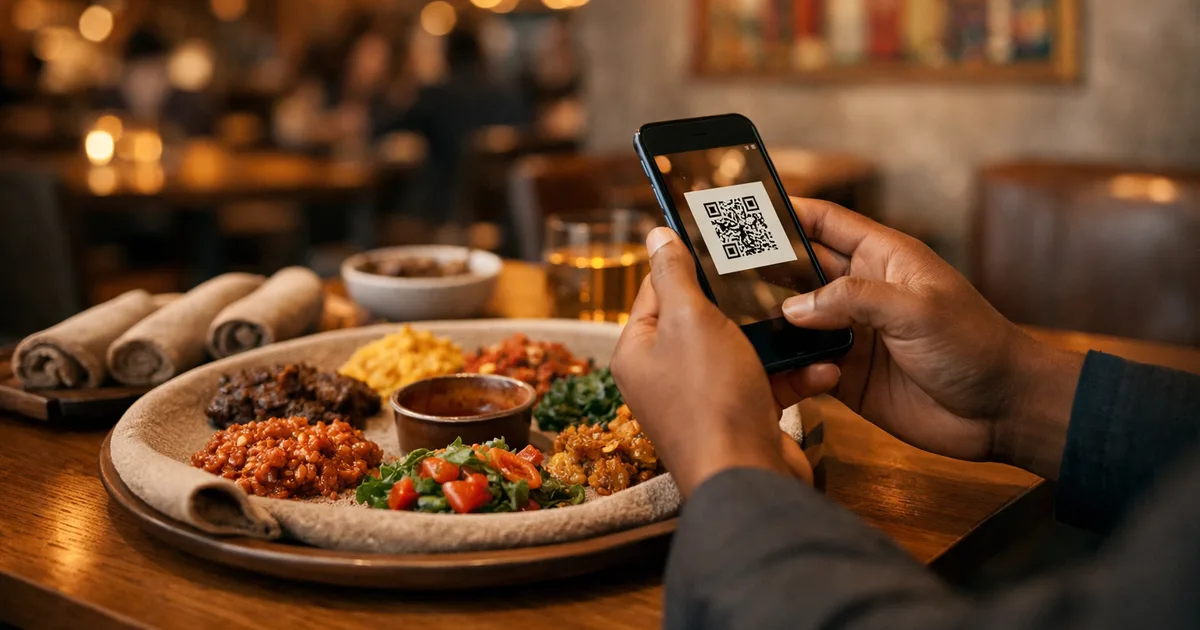
That mix creates a real practical problem. A menu printed in English alone — still the most common approach in tourist-facing Addis restaurants — is readable by a minority of international guests. A menu printed in Amharic is opaque to almost every non-Ethiopian visitor. An injera platter with twelve compartments of wot, salata, and tibs is delicious, but the names and ingredients on a printed card tell a first-time international guest very little about what they are about to eat. Description, allergen content, and portion context all need to cross the language barrier — and they currently often do not.
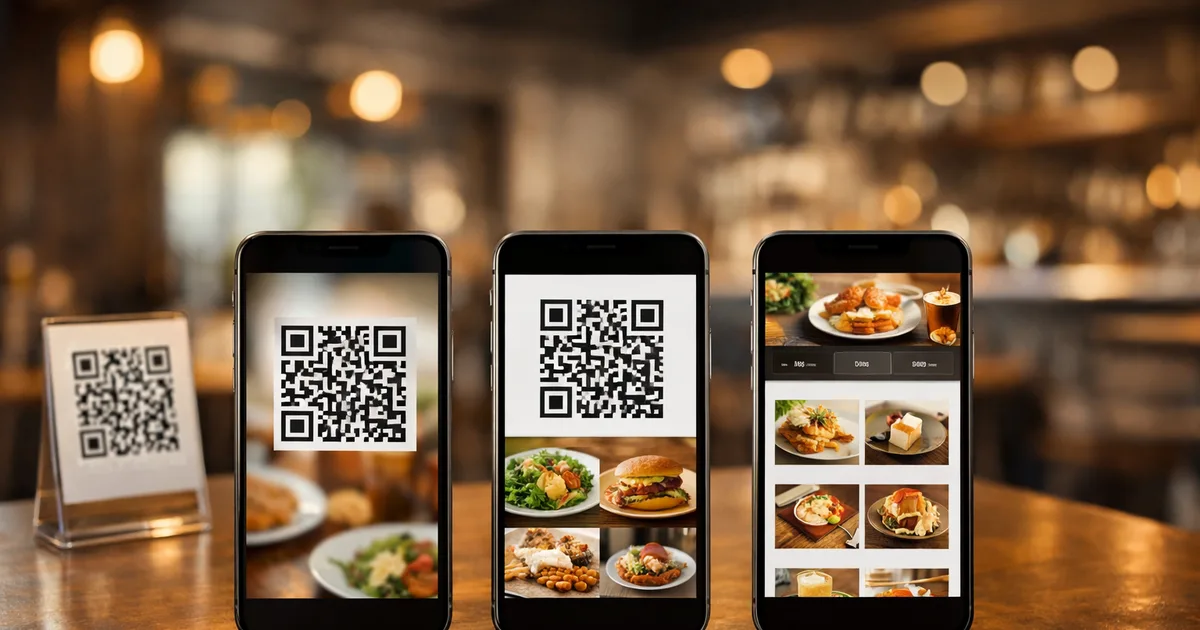
A QR code menu with 16 languages solves the problem from a single printed code on the table. The guest opens it in Amharic, English, Arabic, French, Chinese, Italian, or Spanish — whichever matches their phone’s default language, or whichever they tap — and reads every dish name, description, and allergen tag in their own words. Staff are freed from explaining the menu in a language they may not speak fluently. Orders are more accurate. Guests who understand what they are eating order more confidently — and typically order more.
For the full picture on how a multilingual restaurant menu works across 16 languages and why it matters in cosmopolitan dining rooms, that guide covers the mechanics in detail.
The impact by neighbourhood:
- Bole — Addis Ababa’s international district, anchored around Bole International Airport and home to the city’s highest concentration of international hotels, airline offices, embassies, and business-class restaurants. The guest mix is the most varied in the city: arriving and departing travellers, expat executives, and diaspora visitors returning home.
- Kazanchis — the diplomatic and institutional hub, directly adjacent to the African Union Commission and UNECA headquarters. Lunch and dinner services here routinely include delegates from across the continent and international civil servants. A menu that reads correctly in French and Arabic is not a luxury in this district — it is a basic courtesy.
- Piazza — the historic Italian-influenced quarter, a favourite among long-term expats and travellers who prefer character over hotel-adjacent convenience. A mix of traditional Ethiopian cuisine and international options served to a guest base that spans a wide range of languages and dietary backgrounds.
- CMC Road and Old Airport — residential areas with a growing café and restaurant scene serving the city’s expanding professional class and international residents, increasingly comfortable with digital-first experiences.
Food safety, allergen transparency, and the EFDA framework
The Ethiopian Food and Drug Authority — EFDA, established under Proclamation No. 1263/2021 — is the federal body responsible for food safety and the licensing and inspection of food establishments across Ethiopia. EFDA’s mandate covers food establishment standards and registration; it does not currently prescribe specific per-dish allergen labelling requirements for restaurant menus in the way the EU’s Regulation 1169/2011 or the UK’s FSA rules do for those markets.
For Addis Ababa restaurants, that means allergen transparency is currently a voluntary choice rather than a legal obligation at the menu level. Voluntary, however, does not mean unimportant. Ethiopian cuisine is rich in ingredients that are common allergens for international guests unfamiliar with the cuisine: peanuts and tree nuts appear in several traditional preparations, wheat features heavily in breads and pastries outside injera, sesame seeds are common in spice blends, and many wot dishes contain dairy. A Gulf visitor with a nut allergy, or a Western guest with a wheat intolerance, has no reliable way to identify which dishes are safe from a standard printed menu.
A QR menu with per-dish allergen tags solves that problem at the source:
- Tag at creation — the information is live and accurate from the first time the guest opens the menu.
- Update when recipes or suppliers change — no laminated annotation, no verbal note passed through four staff members.
- Serve the information in the guest’s language — an Arabic-language allergen tag does the job that an English one does not.
Global food safety frameworks are moving consistently toward more allergen transparency at the restaurant level, not less. Voluntary tagging now positions your venue ahead of where the regulatory direction is heading.
QR menu vs. alternatives, for an Addis Ababa restaurant
| Approach | Languages | Allergen info | Update speed | Cost per change |
|---|---|---|---|---|
| Printed menu | One per print run | Static or absent | Reprint required | Print cost + downtime |
| PDF sent via WhatsApp or email | One per file | Static in the file | Manual re-upload | Low but cumbersome |
| QR code menu (ShevaFood) | 16, from one code | Tagged per dish, live | Instant from any device | Zero |
For the full breakdown of how QR menus compare across every dimension, the Complete Guide to QR Code Menus for Restaurants is the reference. If you want to see how a similarly cosmopolitan African city handles the same challenge, the QR menu guide for Lagos restaurants is a direct comparison.
How to get your Addis Ababa restaurant’s QR menu live
No developer, no print budget, no specialist required. Most operators are live in a single setup session:
- Build your menu in Amharic and English — add your categories (firfir, tibs, wot, injera platters, juices, pastries), dish descriptions, and prices. Both scripts work — the platform handles Ge’ez script natively.
- Enable your additional languages — switch on Arabic, French, Chinese, or any of the other 13 languages your guests speak. The full menu becomes readable in every activated language with a tap.
- Tag allergens per dish — mark gluten (wheat in injera flour), nuts, dairy, shellfish, and eggs so guests with dietary restrictions can order without asking staff.
- Generate and place your QR code — download it and print it on table cards, a sign at the entrance, or your menu stands. One code, one menu, every language, always current.
- Test before service — scan on your own phone, switch languages, verify allergen tags. Walk your team through it in two minutes.
Launch your Addis Ababa menu today
Frequently asked questions
Adoption is growing, particularly in the Bole and Kazanchis neighbourhoods where tourist-facing and diplomatic-community restaurants see the highest demand from international guests. The QR code habit in Addis is reinforced by the spread of mobile payment platforms — many diners already scan QR codes for Telebirr and CBE Birr transactions before they ever look at a menu, so the gesture is already familiar.
Amharic and English are the essential pair — together they cover the vast majority of both local and international guests. For the next tier: Arabic reaches Gulf and Middle East business travellers and the significant regional Arab community; French serves francophone African delegations and visitors who make up a consistent share of AU-related traffic; Chinese addresses a rapidly growing business and investment community. ShevaFood’s 16-language menu lets you activate exactly the languages your dining room actually needs.
Yes. ShevaFood’s free plan is available globally, including Ethiopia. You can create a full QR code menu, activate multilingual access in Amharic and English, and generate a scannable QR code without entering payment details. The free QR menu guide explains exactly what the free tier includes and at what point an upgrade makes sense for a busier operation.
EFDA (Proclamation No. 1263/2021) governs food establishment licensing and food safety standards across Ethiopia. The authority does not currently mandate specific per-dish allergen disclosure for restaurant menus — unlike the EU or UK. Voluntary allergen tagging on a digital menu is a forward step that directly serves guests with dietary restrictions and positions your restaurant ahead of where global food safety standards are heading.
A QR menu is a lightweight standard web page — no app download, no account, no large file transfer. It loads in the guest’s existing mobile browser in a few seconds, even on typical Ethio Telecom 3G or 4G connections. The menu was designed to be practical in real-world network conditions in emerging markets, not just on fast city-centre Wi-Fi.
The bottom line for Addis Ababa restaurateurs
Addis Ababa’s dining rooms are genuinely international in a way few cities can match: the African Union, a hundred-plus embassies, 1.4 million annual international visitors, and an Ethiopian Airlines network that touches 145 destinations all converge at your tables. A printed menu in one language, or even two, cannot serve that mix well. A QR code menu that switches between Amharic, English, Arabic, French, Chinese, and 11 other languages — from one small printed code, with allergen tags per dish and price updates at zero cost — can.
The free plan removes the barrier to starting. One afternoon of setup, and your menu speaks the languages your guests actually use.
Ready to see it live on your own tables? Start your free ShevaFood account and have an Addis Ababa-ready digital menu live before your next service.
Sources
- List of Restaurants in Addis Ababa — Business Count April 2026 — RentechDigital , 2026-04-01
- Ethiopia attracts over 1.4 million foreign visitors in 2025/26 fiscal year — The Peninsula Qatar , 2026-07-01
- Ethiopia's Tourism Momentum Accelerates With 1.4 Million Visitors, $5.2 Billion Earnings — Fana Broadcasting , 2026-07-07
- Ethiopia's Tourism Boom in 2026 — Aviation Networks Drive Unprecedented Arrivals — Travel and Tour World , 2026-01-01
- Ethiopian Airlines — 145 Destinations, Rising as Africa's Ultimate Gateway — Travel and Tour World , 2026-01-15
- Digital 2025: Ethiopia — Global Digital Insights — DataReportal , 2025-01-31
- Ethiopian Food and Drug Authority (EFDA) — Official Website — EFDA
- Living in Addis Ababa as an Expat: Diplomatic Community 2026 — LivingEthio , 2026-01-01