QR Menus for Lagos Restaurants: The 2026 Guide for Nigeria
Lagos has more than 8,400 restaurants, 150 million mobile connections, and some of Africa's most cosmopolitan dining rooms. This guide shows Lagos restaurateurs how a multilingual QR code menu turns the city's mobile-first audience and diverse guest mix into a real competitive advantage.

Why Lagos is Africa’s most mobile-ready market for digital menus
Lagos runs on mobile. Nigeria has 150 million cellular mobile connections — equivalent to 64 percent of the entire national population, according to January 2025 data from DataReportal and GSMA Intelligence. Crucially, 94.4 percent of those connections are broadband (3G, 4G, or 5G), meaning the smartphone in your guest’s hand almost certainly has a live internet connection capable of opening a menu in seconds.
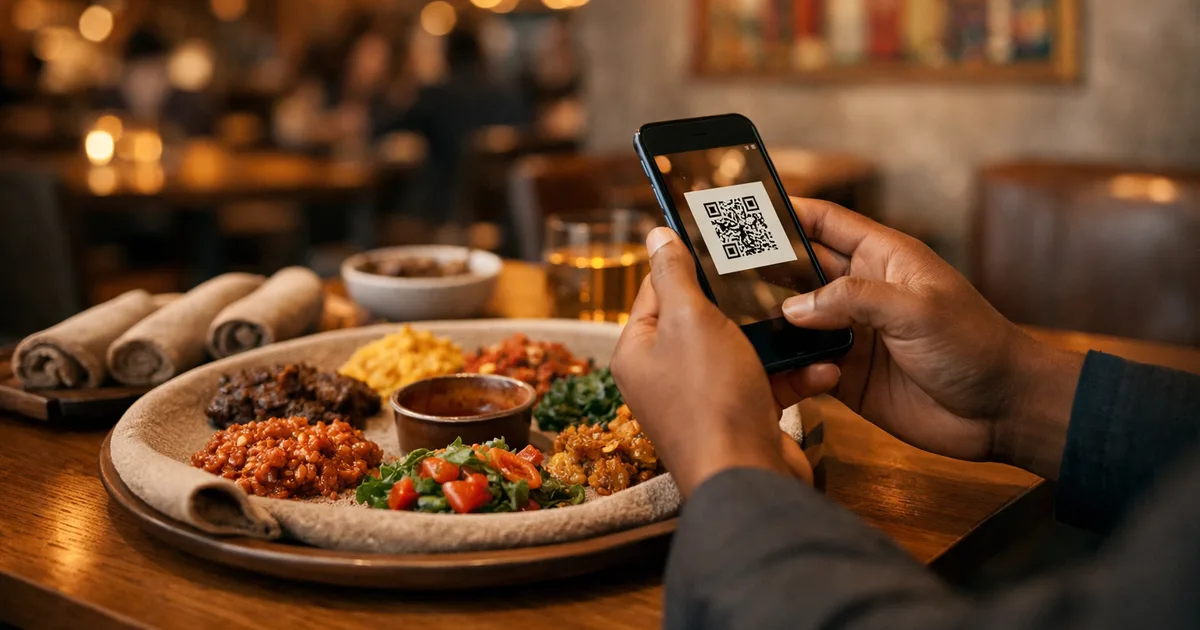
That context matters for restaurateurs. A QR code menu requires no app download, no account, and no special hardware — just the camera that came with the phone every guest is already carrying. In Lagos, where smartphone usage has grown steadily alongside the boom in mobile banking and fintech adoption, scanning a QR code is already a routine behaviour: people scan for bank transfers, parcel pickups, and event check-ins before they ever arrive at your table. A QR menu is not a new behaviour to teach — it is an extension of one they already perform dozens of times a day.
Nigeria’s foodservice market reached USD 11.09 billion in 2025 and is forecast to hit USD 12.37 billion in 2026, according to Mordor Intelligence, growing at 11.55 percent annually. Digital payments are already reshaping how Lagos restaurants operate: following Nigeria’s cashless policy push in 2023, POS terminal adoption among quick-service restaurants surged dramatically. A QR menu is the natural next layer in that same digital shift — same phone, same scan behaviour, applied to the menu before the payment.
TL;DR for Lagos operators
- Nigeria has 150 million mobile connections, with 94.4% broadband — your guests are already scanning QR codes for payments, logistics, and apps before they reach your table.
- Lagos has more than 8,400 restaurants from Victoria Island to Surulere — a market that digital tools are actively reshaping.
- Lagos serves Lagosians, West African visitors, diaspora guests, and international business travellers at the same table — a QR menu that switches languages serves all of them from one printed code.
- NAFDAC’s food hygiene framework emphasises allergen transparency on food products; voluntary per-dish allergen tagging on a digital menu gives guests the clarity they need to order safely.
- The free plan means your first QR menu costs nothing to build.
A cosmopolitan table — why multilingual menus matter in Lagos
Lagos is one of the most linguistically diverse cities on earth. Nigeria has over 500 languages, with Yoruba, Igbo, and Hausa the three largest, and English the official commercial language across a city that functions as West Africa’s financial and cultural capital. Add the city’s substantial expat community — in banking, oil and gas, and the creative industries — and its growing international visitor base, and a typical Friday evening in the right restaurant can span a dozen spoken languages at the same sitting.
Lagos recorded 18,273 international tourist arrivals in 2024 — an 8.8 percent increase over 2023, according to official Lagos State figures. And the city’s annual “Detty December” season, when diaspora visitors from the UK, US, Canada, and across the Caribbean return in large numbers, generated USD 71.6 million in tourism-related revenue in December 2024 alone, with hotels reaching 90 percent occupancy. International and diaspora guests form a real, growing share of the Lagos dining market — and they arrive with languages and expectations that a single printed English menu was not built to serve.
A QR menu with 16 languages gives every guest at that table the full menu in their own words, without flagging down staff. That clarity means more confident ordering — and confident guests order more. The multilingual advantage lands differently by neighbourhood:
- Victoria Island — Lagos’s premium dining district, home to internationally-acclaimed venues and a concentration of embassies, multinationals, and upscale international clientele who expect a polished experience at every touchpoint, including the menu itself.
- Lekki Phase 1 — waterfront restaurants along the lagoon corridor serve a cosmopolitan mix of Lagos’s young professionals, creative industry, and international visitors who have discovered the neighbourhood’s food scene. A multilingual menu matches the outward-facing identity of these venues.
- Ikeja (Allen Avenue, GRA, Toyin Street) — as Lagos State’s administrative capital and the gateway district for Murtala Muhammed International Airport, Ikeja restaurants handle a constant flow of first-day arrivals and departing travellers from across West Africa and beyond.
- Surulere and Yaba — Lagos’s emerging cultural dining zones, where digitally native diners already use their phones for everything else and expect restaurants to be at least as connected as they are.
For a deeper look at how a multilingual restaurant menu works across 16 languages and why it matters for tourist-facing and cosmopolitan venues, that guide covers the full picture.
Food safety, allergen transparency, and what digital menus make manageable
NAFDAC — Nigeria’s National Agency for Food and Drug Administration and Control — governs the safety of food products across the Nigerian market. Its food regulations framework and published labelling requirements mandate clear allergen disclosure on packaged and processed food products, covering milk, peanuts, soy, wheat, tree nuts, fish, shellfish, and eggs. Nigeria has not yet codified a statutory requirement for per-dish allergen disclosure specifically on restaurant menus — unlike the EU’s Regulation 1169/2011 or the UK’s FSA rules — but the direction of travel across food safety frameworks globally is toward more transparency, not less.
For Lagos restaurants, voluntary per-dish allergen tagging on a digital QR menu is a practical step ahead of where that framework is heading, and a direct service to guests today. A guest with a groundnut allergy, or a visitor unfamiliar with which local dishes typically contain tree nuts or shellfish, needs accurate, up-to-date information to order safely. On a printed menu, that information is often absent, outdated, or difficult to update when a recipe or supplier changes.
A QR menu makes allergen management genuinely workable:
- Tag each dish at creation — the information appears on every guest’s screen, in every language, every time.
- Update instantly when a recipe or supplier changes — no annotation on a laminated card, no gap between what the kitchen knows and what the guest sees.
- Give guests the clarity to order with confidence — which is both a duty of care and a practical driver of better table decisions.
QR menu vs the alternatives, for a Lagos restaurant
| Approach | Languages | Allergen info | Update speed | Cost to change |
|---|---|---|---|---|
| Printed menu | One per print run | Static | Reprint | Print cost + downtime |
| PDF via WhatsApp or website | One file per language | Static in the file | Re-upload manually | Low but cumbersome |
| QR code menu (ShevaFood) | 16, from one code | Tagged per dish, live | Instant, any device | Zero per update |
For a comprehensive look at how QR menus work across all setup and cost dimensions, the Complete Guide to QR Code Menus for Restaurants is the full reference. If you want to see how restaurants in another high-footfall, cosmopolitan city handle the same challenges, the QR menu guide for NYC restaurants is a useful comparison.
How a Lagos restaurant gets a digital menu live
No developer, designer, or print budget required. Most operators are live within a single setup session:
- Build your menu — add your categories (starters, soups, grills, mains, drinks, desserts), dishes, prices, and photos. Type from scratch or import an existing menu to speed things up.
- Enable your languages — switch on the languages your guests actually speak. Your full menu — names, descriptions, prices, and allergen tags — becomes readable in each language with a tap.
- Tag allergens per dish — mark each item for the major allergens so guests can self-serve the information they need before ordering.
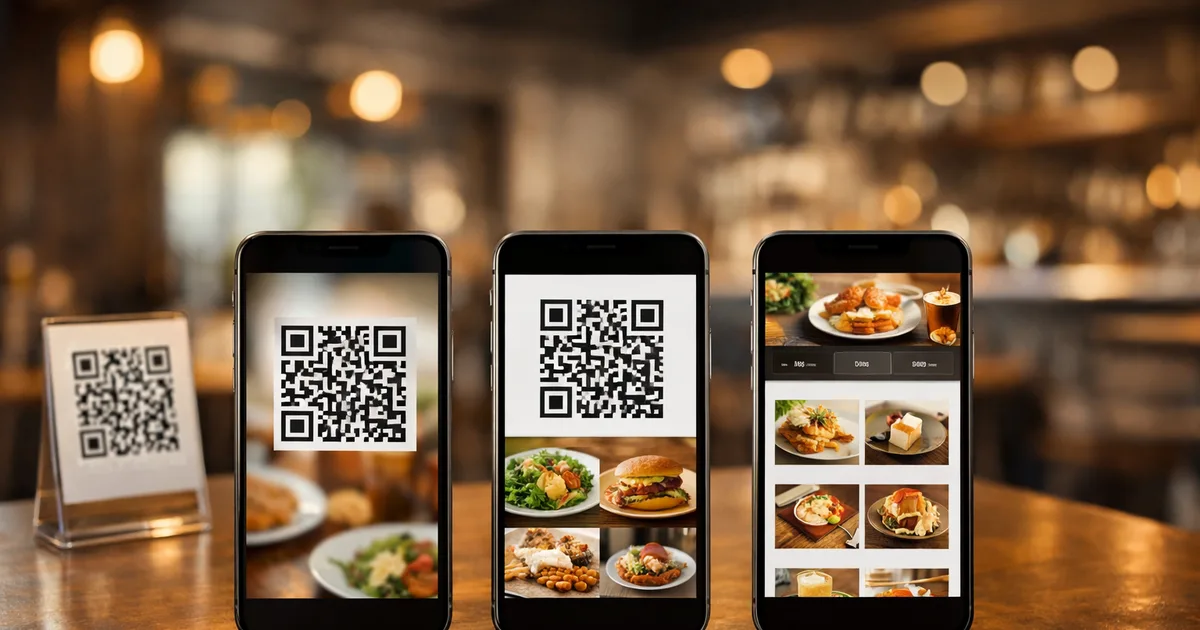
- Generate and display your QR code — print it on a table tent, an entrance sticker, or a placard at each table. One code covers the full menu, every language, every time.
- Test before service opens — scan the code on your own phone, switch between languages, and confirm allergen tags show correctly. Walk your team through it so they can answer guest questions with confidence.
Launch your Lagos menu today
Frequently asked questions
Yes. Nigeria has 150 million mobile connections, with 94.4% being broadband — meaning most guests can open a QR menu via their phone’s native camera in seconds. Across Lagos, Abuja, and Port Harcourt, digital menus have become mainstream in modern restaurants, cafés, and lounges — adoption accelerated sharply after Nigeria’s cashless push in 2023, when the habit of scanning codes for payments became everyday behaviour.
English is the standard first language, but the highest-impact additions depend on your guest mix. French is essential for West African regional visitors and the francophone expat community; Arabic covers Gulf and North African business travellers; Yoruba serves Lagosian guests who prefer reading in their home language; and Mandarin reaches the growing East Asian business community. ShevaFood’s 16 languages mean you can activate exactly the ones your tables actually need.
A QR menu rendered as a standard web page is far lighter than a PDF or a delivery app — there is no large file to download, no install step, and no heavy framework to initialise. It is designed to open efficiently on typical Lagos 3G and 4G connections. The menu loads in the browser the guest already has open, typically within a few seconds even on a congested network.
NAFDAC’s allergen labelling framework covers packaged and processed food products, requiring clear disclosure of milk, peanuts, soy, wheat, tree nuts, fish, shellfish, and eggs. Nigeria has not yet codified the same requirement for restaurant menus as the EU or UK. Adding per-dish allergen tags to a QR menu is a voluntary step that directly serves guests with food allergies, reduces table-side questions for staff, and positions your restaurant ahead of the direction the food safety framework is moving.
Yes. ShevaFood’s free plan is available globally, including Nigeria. You can create a full QR menu, enable multilingual access, and generate a scannable QR code without entering payment details. Our free QR menu generator guide explains exactly what the free tier includes and when an upgrade makes sense for a busier operation.
The bottom line for Lagos restaurateurs
Lagos has more than 8,400 restaurants and one of the most mobile-connected customer bases in the world. Its dining rooms host Lagosian families, West African visitors, UK and US diaspora guests, and business travellers from across the globe — often all at once, at the same sitting. A printed English menu handles none of that well. A QR code menu readable in 16 languages, tagged per dish for allergens, and updatable in seconds at zero cost per change handles all of it from one small printed code on your table.
The free plan means the barrier to starting is a single setup session, not a budget conversation.
Ready to see it working on your own tables? Start your free ShevaFood account and have a Lagos-ready digital menu live before your next service.
Sources
- Digital 2025: Nigeria — Global Digital Insights — DataReportal , 2025-01-31
- GSMA — Accelerating Smartphone Adoption in Africa — GSMA , 2025-11-01
- Nigeria's internet penetration reaches 50% as 70% target far off — TechCabal , 2025-12-24
- Nigeria Foodservice Market Size & Share Outlook to 2031 — Mordor Intelligence , 2026-01-01
- Nigeria's $11bn food industry ditches cash as digital payments reshape restaurant business — BusinessDay NG
- Lagos reports 18,273 international tourists in 2024, up from 16,798 in 2023 — Nairametrics , 2025-10-15
- Detty December: Lagos generates $71.6m revenue from tourism — Vanguard Nigeria , 2025-01-01
- NAFDAC Food Regulations — NAFDAC
- NAFDAC Labelling Requirements for Processed and Pre-packaged Foods — Mondaq
- The Digital Menu Revolution: How Technology Is Transforming Nigeria's Hospitality Industry — Independent NG