QR Menus for NYC Restaurants: The 2026 Local Guide
New York City's five boroughs hold more than 800 languages, millions of international visitors, and a new allergen labeling law taking effect in November 2026. This guide shows NYC restaurateurs how a multilingual QR code menu turns all three into a competitive advantage.

Why NYC is the hardest city in the world to print a menu for
No city puts a restaurant menu under more pressure than New York. On a single Saturday night in Hell’s Kitchen, the same kitchen might feed a family from Seoul, a couple from Mexico City, a party of French tourists, and a table of regulars from Queens who speak Cantonese at home. New York City’s five boroughs are home to speakers of more than 800 languages — a linguistic diversity unmatched anywhere on earth — and the city draws tens of millions of international visitors every year.
Add to that a fast-moving kitchen where suppliers change, specials sell out by 7pm, and ingredient costs shift week to week. Then factor in a regulatory environment that is only getting more demanding on allergen disclosure and nutrition transparency. A printed menu, fixed the moment it leaves the printer, simply cannot keep up with all of this at once.
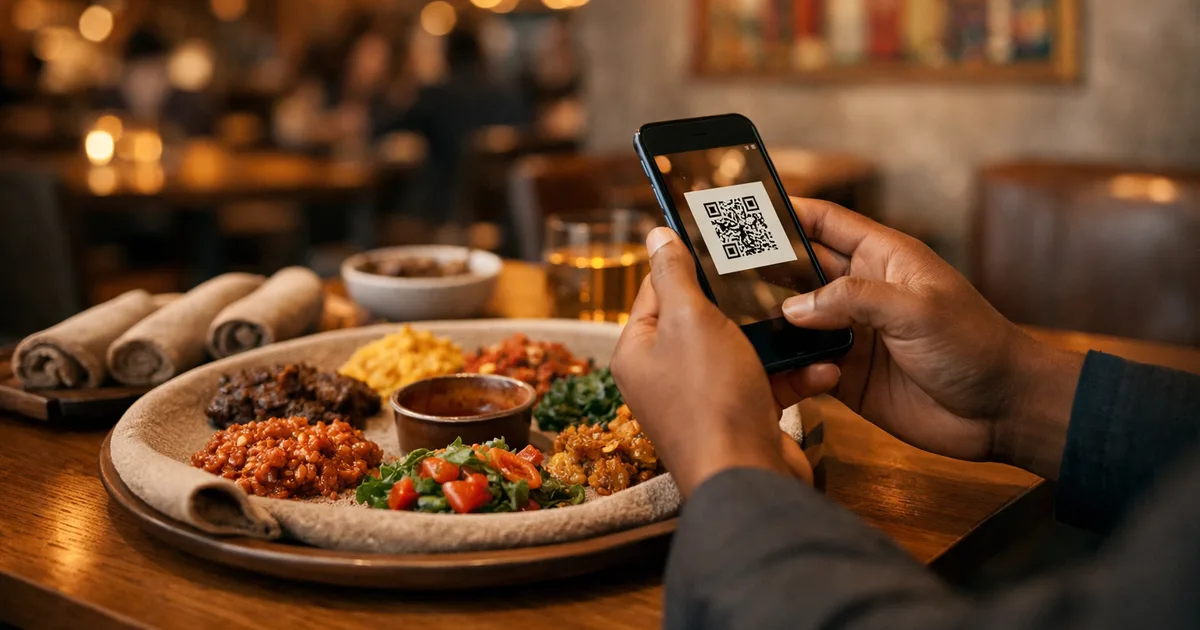
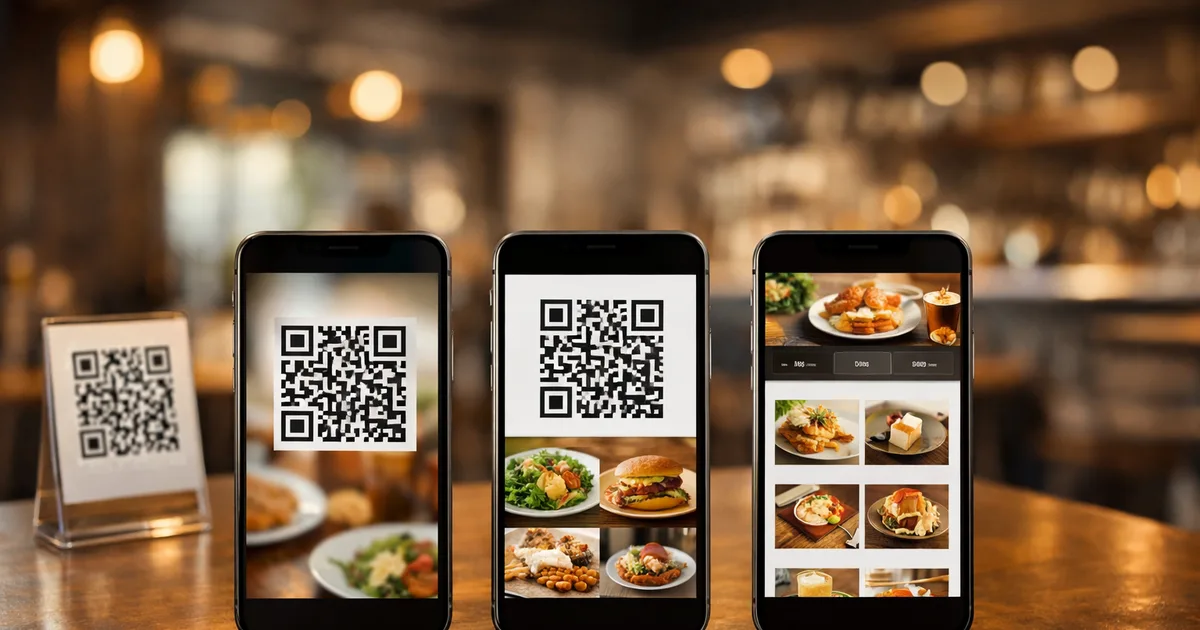
A QR code menu is a digital menu your guests open by scanning a small code with the camera already in their hand. No app to download, no account to create: the menu loads in seconds, in their language, with current prices, photos, and allergen information you can update from anywhere. This guide is for NYC restaurant operators who are ready to make the switch — or who want to understand exactly what they’re getting before they do.
TL;DR for busy operators
- NYC’s linguistic diversity makes a single-language printed menu a missed-revenue problem at every multilingual table.
- A QR code menu serves your full menu in many languages from one printed code — no stacks of translated menus.
- New York State’s new allergen labeling law, signed November 2025 and taking effect November 2026, signals the direction of travel on disclosure requirements.
- Guests who can read your menu properly order more confidently; updating prices or specials takes seconds.
- The strongest approach for NYC right now is hybrid: QR code for multilingual access and real-time updates, paper available on request for guests who prefer it.
Pressure 1: New York speaks hundreds of languages — your menu should too
The single highest-ROI change most NYC restaurants can make is multilingual menus. When a guest cannot read the dish descriptions, or cannot tell whether something contains an allergen that concerns them, the cautious move is to order the one recognizable item — or to under-order. That quiet decision happens at hundreds of thousands of NYC tables every night, and it costs operators real revenue.
With ShevaFood, you build your menu once and switch on the languages your guests actually speak. A guest taps a language selector and reads the entire menu — categories, dish names, descriptions, allergen tags, prices — in their own words. One QR code on the table quietly handles what used to require a stack of laminated translated menus, none of which would be current anyway.
The language argument hits differently by neighborhood:
- Flushing and Jackson Heights: restaurants here routinely serve Mandarin, Korean, Cantonese, Spanish, and Bengali speakers at the same hour. A multilingual QR menu is not a novelty — it is the practical baseline.
- Hell’s Kitchen and Midtown: heavy tourist corridors mean European, Japanese, and Latin American diners at nearly every sitting. A guest who can read your menu in French or Japanese and see the allergen tags is a more confident — and higher-spending — guest.
- Williamsburg and the Lower East Side: internationally-minded diners who photograph everything and share their experience online. A thoughtful digital menu that respects their time is part of the hospitality.
- Upper East Side and Midtown fine dining: guests from the Gulf, East Asia, and South America who appreciate a menu that explains an unfamiliar preparation in their language rather than leaving them to guess.
The underlying principle is the same across all five boroughs: in a city this international, legibility is part of hospitality — and a printed menu can only ever be legible to a fraction of the room at once.
Pressure 2: New York’s allergen law — and what it means for your menu
New York State is moving firmly toward greater allergen transparency on food menus. In November 2025, Governor Hochul signed legislation requiring allergen labeling on packaged food sold directly to consumers on premises — the first state in the US to require this for grab-and-go counters, delis, and bakery cases. The law takes effect November 2026, giving businesses one year to comply.
As Allergic Living reported, the requirements apply to any pre-packaged food made and sold on premises, regardless of business size — meaning NYC restaurants with a bakery case, grab-and-go section, or packaged deli items need to have the nine major FDA allergens (milk, eggs, fish, shellfish, tree nuts, peanuts, wheat, soy, sesame) clearly disclosed on labeling before next November.
For table-service menus, New York’s existing requirements already place an obligation on restaurants to be able to inform guests of allergens in every dish — and the trend line from the new law is unmistakable. The direction of travel is more disclosure, not less, and the venues that get ahead of it avoid the scramble.
A digital QR menu makes allergen compliance genuinely manageable:
- Tag each dish once, at the point of creation — the information shows on every guest’s screen, in every language, every time.
- Update instantly when a recipe or supplier changes — no smudged annotations, no printed inserts that contradict the current reality.
- No gap between the kitchen’s truth and the guest’s view — because both are pulling from the same live source.
For the full picture on US allergen regulation, including New York’s legislation and how other states are following, see our coverage: US Restaurant Allergen Laws 2026: The State-by-State Wave.
Pressure 3: The honest truth about QR menus in NYC — and the hybrid model that works
Here is something competitor content rarely says plainly: a significant share of diners genuinely prefer paper menus. Surveys have found many guests — particularly older diners and those who find small screens uncomfortable — would rather hold a physical menu. Some NYC restaurants that switched to QR-only formats have brought paper menus back after noticing their check averages declined — guests who don’t scroll don’t discover upsell items they would have seen on a physical spread.
This doesn’t mean QR menus are wrong for NYC restaurants — it means QR-only is often wrong.
The model that actually works is hybrid: a QR code on every table for the guests who prefer it (typically international visitors, younger diners, and anyone who wants the multilingual or allergen-filter features), plus physical menus available on request. You get the upside of the digital format — instant updates, multilingual access, zero reprinting cost — without alienating the guests who don’t want to interact with their phone to order food.
In practical terms:
- Print one set of physical menus for guests who ask, and update them seasonally or when prices shift substantially.
- Keep the QR menu current daily — sold-out dishes hidden, specials added with photos, prices reflecting what your team is actually charging tonight.
- Train staff to offer both — “here’s the QR code if you’d like, or I can bring a printed menu” — rather than assuming one format suits everyone.
QR menu vs. the alternatives, for a New York restaurant
| Approach | Languages | Allergen info | Update speed | Cost to change |
|---|---|---|---|---|
| Printed menu | One per print run | Static, easy to outdate | Reprint or hand-annotate | High (NYC commercial print rates) |
| PDF on a link | One PDF per language | Static in the file | Re-export and re-upload | Low but cumbersome |
| QR code menu (ShevaFood) | Many, from one code | Tagged per dish, always current | Instant, every table | Zero per update |
For a deeper look at how QR menus compare across all dimensions — setup, cost, mistakes and platform choice — the Complete Guide to QR Code Menus for Restaurants covers it in full. This NYC guide is the local companion. And if you want to compare this approach with what London restaurants are doing with the same challenges, see our QR Menu guide for London restaurants.
How a New York restaurant gets a digital menu live
You don’t need a developer, a designer, or a reprinting budget. The path is straightforward:
- Build your menu — add your categories, dishes, prices, and photos. Start fresh or import an existing menu to speed things up.
- Tag allergens per dish — mark each item for the nine major allergens so guests can filter and self-serve the information they need.
- Enable your languages — switch on the languages your guests speak so the whole menu translates with a tap.
- Generate and display your QR code — print it on table tents, stickers, an A-board, or a window cling. One code covers your full menu at every table.
- Test it yourself — scan the code on your own phone, switch languages, check allergen tags, and make sure everything looks right before the service opens.
Most operators have their first menu live within a single setup session. Every future change — a new dish, a sold-out item, a price correction — takes seconds.
Launch your NYC menu today
Frequently asked questions
Yes. iPhone’s native camera has scanned QR codes since iOS 11 in 2017, and Android followed shortly after — which means most guests already know how to use one without any explanation. Contactless ordering is now standard across NYC dining formats, from hotel restaurants to food halls. International visitors especially value being able to read the menu in their own language without waiting for a member of staff.
New York’s allergen labeling law, signed November 12, 2025 and effective November 2026, primarily covers pre-packaged food sold on premises — grab-and-go counters, delis, bakery cases. For dine-in table service, the existing obligation to inform guests of allergens in all dishes remains in place. A QR menu with per-dish allergen tags gives you accurate, consistently updatable disclosure that a printed menu simply cannot match — and it future-proofs you as the regulatory direction continues toward greater transparency.
No city or state law requires paper menus for table-service restaurants in NYC. But surveys show a meaningful share of diners — particularly older guests and those who find small screens uncomfortable — prefer a physical option. The evidence from restaurants that went QR-only and experienced check-average declines suggests the hybrid approach (QR code available, paper on request) delivers the best outcome for most NYC operators.
A QR menu that opens as a properly structured HTML page — with semantic markup, sufficient color contrast, screen-reader-compatible labels, and readable font sizes — can satisfy ADA digital accessibility standards. A PDF file behind a QR code typically cannot, because screen readers cannot reliably navigate PDFs designed as visual documents. For NYC restaurants serving a broad public, a proper HTML-based QR menu closes this accessibility gap that many operators don’t realize their current PDF menus create.
Flushing and Jackson Heights lead the list — restaurants there serve Mandarin, Korean, Cantonese, Spanish, and Bengali speakers daily, and a QR menu that switches languages on demand is a direct answer to that operational reality. Hell’s Kitchen and Midtown see heavy tourist traffic from Europe, Asia, and Latin America. Williamsburg and the Lower East Side attract internationally-minded younger diners who expect a polished digital experience. Any venue near a major hotel cluster, tourist attraction, or transit hub will see similar multilingual demand — and the same QR menu handles it all.
The bottom line for New York restaurateurs
New York City asks your menu to serve the most linguistically diverse customer base on earth, stay current with a regulatory environment that is moving toward more allergen transparency, and keep pace with a kitchen that changes every day. A printed menu handles none of these demands well. A multilingual QR code menu handles all three — readable in your guests’ languages, tagged per dish for allergens, and updated in seconds at zero cost per change.
The right model for NYC right now is hybrid: QR on the table, paper available on request. Get the technology working for the guests who want it, keep the option open for those who don’t, and leave yourself free to focus on the food.
Ready to see it working on your own tables? Start your free ShevaFood account and have a New York-ready multilingual menu live before your next service.
Sources
- Harckham, Lunsford Bill Requiring Allergen Labeling Signed into Law — New York State Senate , 2025-11-12
- NY Law Brings Allergen Labeling to Deli, Bakery Packaged Foods — Allergic Living , 2025-11-13
- Restaurants Reintroduce Paper Menus Amid Customer Complaints About QR Codes — PYMNTS , 2024-06-01
- Customers really don't like QR code menus — Restaurant Business Online
- Scan a QR code with your iPhone camera — Apple Support
- New York City Restaurant Industry Statistics — OysterLink , 2026-01-01
- Digital Menu Accessibility: ADA Compliance and Inclusive Design Guide — Evergreen