California's Restaurant Allergen Law Goes Live July 1 — and Five More States Are Moving
SB 68 enforcement begins July 1, 2026. California's CDPH will verify allergen disclosures on-site; violations can rise to a misdemeanor. Maryland and New Jersey have introduced their own allergen bills since the last update, taking the wave to five active US states.

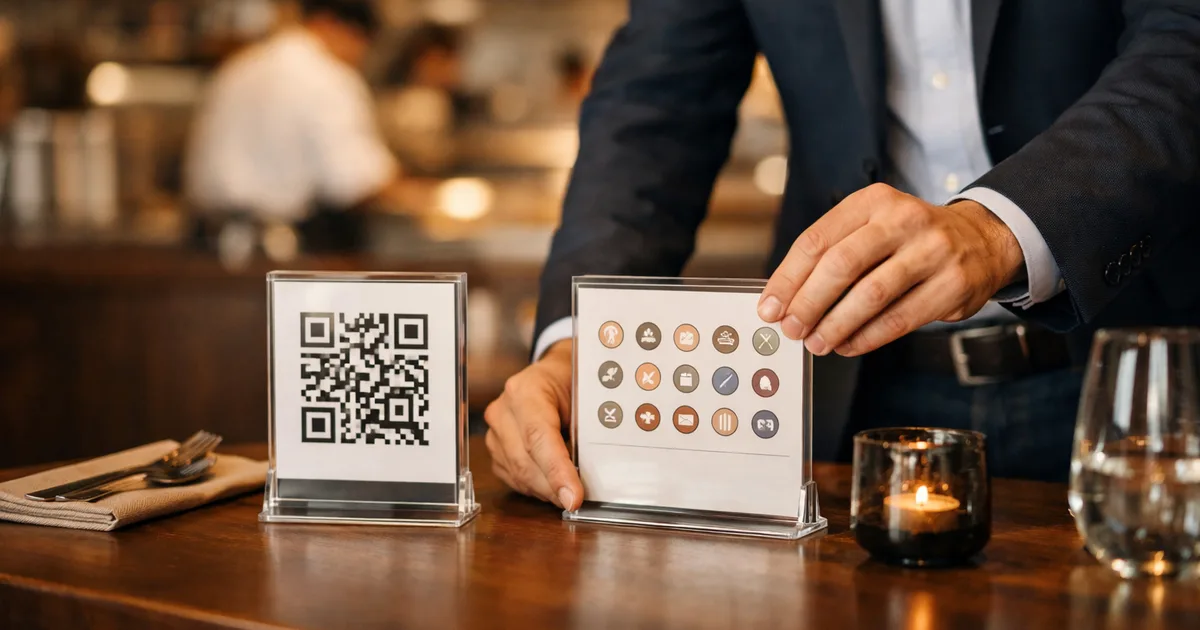
California’s Allergen Disclosure for Dining Experiences Act (SB 68) takes effect on 1 July 2026 — two days from now. Chain restaurants with 20 or more US locations must have written allergen disclosures live on their menus when service opens on Tuesday morning. The California Department of Public Health (CDPH) and local environmental health agencies will begin verifying compliance through site inspections, with violations enforceable under the California Retail Food Code as a misdemeanor. Since our last report on this topic, two additional states — Maryland and New Jersey — have introduced their own allergen disclosure bills, bringing the active US legislative count to five.
TL;DR
- California SB 68 (effective 1 July 2026) — chains of 20+ locations must display all 9 major allergens in writing per menu item; QR code digital menus are accepted when a non-digital fallback is also provided.
- Enforcement begins immediately: CDPH and local agencies will verify compliance via on-site inspection; non-compliance may constitute a criminal misdemeanor under California law.
- Maryland HB 181 (introduced January 2026) would require all restaurants — not just chains — to display written allergen notices, with fines up to $5,000 per day; effective date October 1, 2026 if enacted.
- New Jersey SB 3394 (introduced February 2026) follows the same all-restaurant model, with no chain-size threshold.
- The direction of travel is clear: written, per-dish allergen information is becoming the default expectation for US food service, regardless of restaurant size.
What July 1 means for covered California chain restaurants
California SB 68 applies to any restaurant chain with 20 or more California locations operating under the same name and offering substantially the same menu — the same threshold as the federal Affordable Care Act nutrition-labeling rules. As ArentFox Schiff explains, these operators must provide written notification of the nine major US food allergens — milk, eggs, peanuts, tree nuts, fish, shellfish, wheat, soy, and sesame — for every item on the menu.
Starting Tuesday, July 1, CDPH and county environmental health departments will evaluate compliance through visual verification: inspectors will confirm that allergen disclosures appear on physical menus, digital menus, or alternative formats. According to the ADDE Act Compliance Hub, the state has signalled an education-first enforcement posture in the opening months — inspectors are expected to guide operators toward compliance rather than immediately issuing fines. That said, persistent non-compliance remains enforceable as a misdemeanor under the California Retail Food Code.
Fisher Phillips has published an eight-step compliance checklist widely referenced in the industry: map ingredients per menu item, identify all nine allergens, choose a display format, and confirm everything is live before the first service of July 1.
QR code menus as a compliant allergen disclosure format
One of the most practically important provisions of SB 68 is explicit: a digital menu, including one accessed via QR code, satisfies the written allergen disclosure requirement, provided a non-digital alternative (a printed menu or dedicated allergen card) is also available for guests who cannot access a smartphone. The written disclosure does not need to appear on a physical printed menu — the digital menu alone is sufficient as long as the fallback exists.
This matters for multi-location operators who update menus frequently. A dynamic QR menu lets you update allergen tags for a single dish in one place, and every guest instantly sees current information — no reprinting cycle. The non-digital fallback can be as simple as a printed allergen list kept at the host stand and available on request.
For a detailed look at how a digital menu handles allergen compliance more broadly, see our guide: QR Menu with Allergens: Stay EU-Compliant the Easy Way.
The state wave grows: Maryland and New Jersey join
When we covered this topic in early June, Michigan and Illinois were the two states actively advancing allergen bills. Two further states have since introduced legislation, according to an Allergic Living analysis from February 2026.
Maryland House Bill 181, introduced by delegate Jamila Woods on 14 January 2026, would require all restaurants — regardless of chain size — to provide written allergen notification for every menu item, via physical menus, digital menus, or a QR code linking to an online menu. If enacted, it carries some of the strongest penalties in any US state: up to one year imprisonment on conviction of a misdemeanor, civil fines of up to $5,000 per day of non-compliance, and the possibility of injunctions. The proposed effective date is 1 October 2026.
New Jersey Senate Bill 3394, introduced by Senator Patrick Diegnan Jr. on 9 February 2026, takes the same approach — written allergen disclosure for every menu item at every food service business — also with no chain-size threshold.
Neither bill has been signed into law, but their introduction follows the same pattern as California’s SB 68 in its early legislative stages. A Spencer Fane briefing notes that states are watching California’s rollout closely; a smooth July 1 enforcement start would likely accelerate the remaining bills.
| State | Law / Bill | Scope | Status | Effective |
|---|---|---|---|---|
| California | SB 68 (ADDE Act) | Chains 20+ locations | In effect 1 Jul 2026 | 1 Jul 2026 |
| New York | Harckham-Lunsford Act | Packaged foods at delis, bakeries, food trucks | Signed Nov 2025 | Nov 2026 |
| Maryland | HB 181 | All restaurants | Introduced Jan 2026 | Oct 2026 (if enacted) |
| New Jersey | SB 3394 | All restaurants | Introduced Feb 2026 | TBD |
| Michigan | HB 5402 | All food service permit holders | Introduced Dec 2025 | TBD |
| Illinois | HB 4686 | All restaurants | Introduced early 2026 | Jan 2028 (if enacted) |
What to do before, on, and after July 1
If you operate a chain with 20+ California locations:
- Confirm written allergen data is published for every menu item as of July 1 — physical, digital, or both.
- Keep a non-digital fallback available (printed menu, printed allergen list, or allergen binder) for guests without smartphones.
- Train staff to direct guests to the allergen disclosure and to facilitate any clarifying conversation — the written disclosure supplements, not replaces, your team.
If you operate outside California (or run an independent restaurant):
- Build your per-dish allergen records now; the legislative trajectory is consistent and the compliance window across multiple states is shorter than it appears.
- A dynamic digital menu is the easiest way to keep allergen data current — recipe changes update everywhere without reprinting.
For multi-state operators:
- Track Maryland HB 181 and New Jersey SB 3394 — both have broader scope than California’s law (all restaurants, no size threshold) and would require independent preparation.
To get allergen information live on your menu today — tagged per dish, visible in 16 languages, and updatable the moment a recipe changes — you can start a free ShevaFood account and be ready before the next service.
Allergen disclosures on every dish, live from today
For a complete picture of how digital QR menus work end to end, see our Complete Guide to QR Code Menus for Restaurants.
Frequently Asked Questions
No. SB 68 covers only chain restaurants with 20 or more locations in California operating under the same name and offering substantially the same menu — the same threshold as federal nutrition-labeling rules. Independent single-location restaurants are not covered under SB 68. However, the pending Maryland HB 181 and New Jersey SB 3394 have no chain-size threshold, meaning every restaurant in those states could become subject to similar requirements if those bills pass.
Yes, with one condition. SB 68 explicitly accepts a digital menu — including one accessed via QR code — as a valid allergen disclosure format. A non-digital alternative (a physical printed menu or a printed allergen reference) must also be available for guests who cannot use a smartphone. Both offered together satisfy the requirement.
The CDPH and local environmental health agencies verify compliance through visual inspection — checking that allergen disclosures are visible on physical menus, digital menus, or alternative formats. Violations fall under the California Retail Food Code and can constitute a misdemeanor. California officials have indicated a collaborative, education-first approach in the early months of enforcement.
As of June 2026: California (SB 68, in effect July 1, 2026), New York (signed November 2025, effective November 2026 for packaged on-premises foods), Maryland (HB 181, introduced January 2026), New Jersey (SB 3394, introduced February 2026), Michigan (HB 5402, introduced December 2025), and Illinois (HB 4686, introduced early 2026). The wave consistently points toward written, per-dish allergen information becoming the legal baseline for US restaurants.
Sources
- SB-68 Major food allergens (Allergen Disclosure for Dining Experiences Act) — California Legislative Information , 13 October 2025
- California Enacts First-in-the-Nation Allergen Disclosure Law for Restaurant Chains — ArentFox Schiff
- Many Restaurant Chains Must Comply with California's New Allergen Disclosure Law: Here's Your 8-Step Plan — Fisher Phillips
- ADDE Act Explained: What California Restaurants Need to Know — ADDE Act Compliance Hub
- Restaurant Allergen Bills Introduced in 3 States, How You Can Help — Allergic Living , 18 February 2026
- House Bill 181 — Maryland 2026 Regular Session — Maryland General Assembly , 14 January 2026
- New Jersey Senate Bill 3394 — LegiScan / New Jersey Legislature , 9 February 2026
- Additional Legislation Expected to Mandate Food Allergen Disclosures for Food Establishments — Spencer Fane
Tags
Related Articles
Virginia's Updated Allergen Rules Are Live — Sesame Added and QR Codes Approved for All Food Establishments
New York Becomes First US State to Require Allergen Labels on Grab-and-Go Foods — November 12, 2026 Deadline