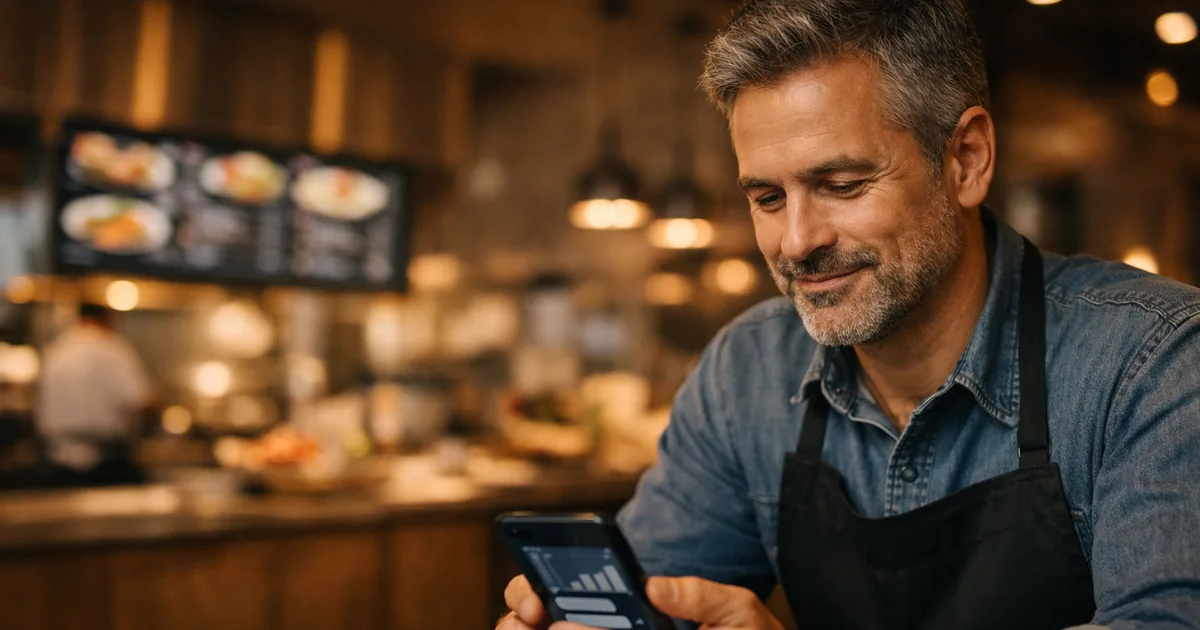
AI Menu Optimization in 2026: Three Launches That Show AI Has Moved Inside the Restaurant
Three verified launches in early 2026 — Deliverect autonomous menu agents, US Foods Menu IQ, and Dishio's customer-intelligence platform — reveal that AI has moved beyond helping diners find restaurants and is now changing what goes on the menu, how it is priced, and how restaurants bring guests back.

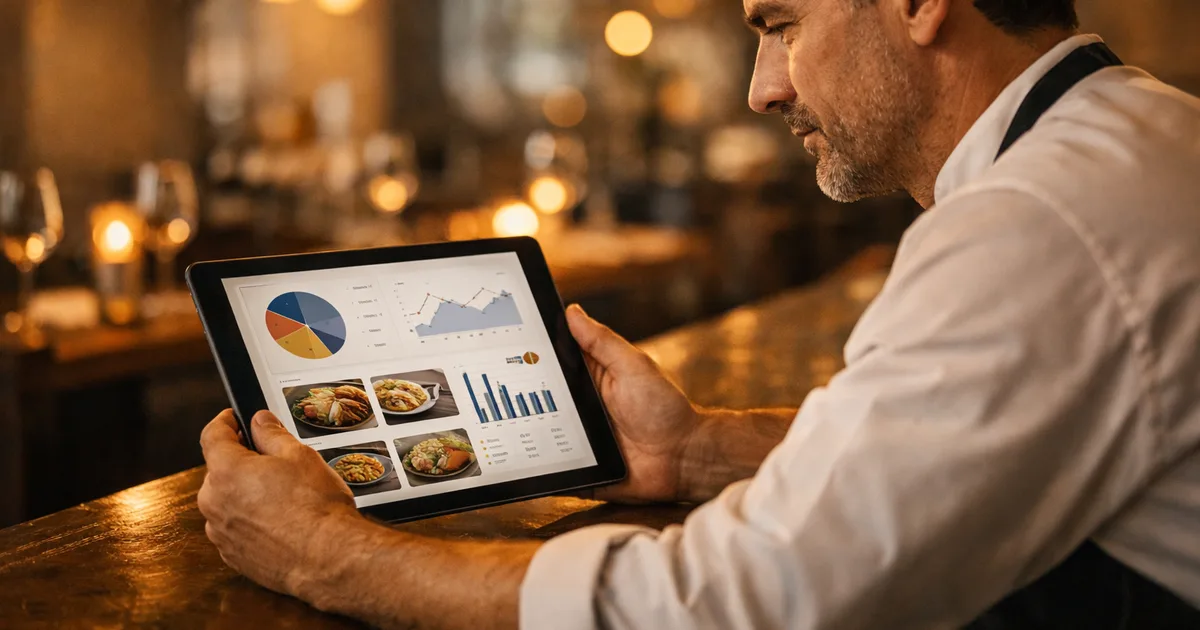
On 9 April 2026, restaurant-technology company Deliverect announced autonomous AI agents that can redesign a promotion menu from scratch without human input — and cited a KFC deployment where the agent produced a campaign that drove a 118% sales increase. Less than three months later, on 30 June 2026, restaurant-AI startup Dishio emerged from stealth having quietly grown to 350+ restaurant customers using AI to turn QR-scan data into repeat-revenue intelligence.
Bracket those two announcements with US Foods’ February 2026 launch of Menu IQ — an AI profitability tracker embedded in the distributor’s existing platform — and the picture that emerges is clear: AI has moved inside the restaurant menu. The conversation in early 2026 was about AI discovery (how diners find restaurants via ChatGPT or Gemini). The conversation by mid-year is increasingly about what AI can do once a customer is already at the table.
Key developments at a glance:
- 9 Apr 2026 — Deliverect launches autonomous AI menu agents; a KFC deployment reported 118% sales uplift with zero human design input (PRNewswire)
- 23 Feb 2026 — US Foods rolls out Menu IQ, giving operators real-time AI visibility into dish profitability through the MOXē platform (BusinessWire)
- 30 Jun 2026 — Dishio exits stealth: 350+ restaurant customers, 15% average guest-retention lift, $2.5 M seed round (GlobeNewswire)
- NRA 2026 — 26% of operators now use AI in some capacity; technology is now a competitive necessity for 8 in 10 operators (NRA, Feb 2026)
AI menu agents: what Deliverect’s April launch actually does
Deliverect’s autonomous AI agents address one of the most time-consuming parts of restaurant operations: keeping digital menus accurate, competitive, and revenue-optimised. The system works in three distinct modes. A menu agent monitors live order data and external signals to recommend — or autonomously apply — changes to the digital menu: adding items for a promotional window, removing slow-movers, or restructuring item placement to lift average order value. A support agent flags errors (missing descriptions, conflicting modifiers, items ordered that are out of stock) before they reach the customer. A smart assistant accelerates ad-hoc changes — generating a Valentine’s Day set-menu or updating a seasonal item — in minutes rather than hours.
The KFC figure in the press release — a promotional menu designed autonomously by an AI agent, resulting in a reported 118% sales increase — illustrates what menu intelligence can achieve when applied at deployment speed. For independent operators, the implication is more modest in scale but identical in kind: AI can act on order-data patterns faster than any human review cycle.
Menu IQ and the supply-chain angle
What makes US Foods’ Menu IQ notable is where it sits: inside the food-distribution relationship rather than as a standalone SaaS product. Operators already buying from US Foods can use Menu IQ through the existing MOXē platform at no added cost. The tool auto-calculates food costs based on current ingredient prices, tracks per-dish margins in real time, and surfaces underperforming items — identifying which are dragging profitability down before an end-of-quarter review would catch them.
This positions menu profitability analysis as a utility, not a premium. Chains have run this analysis for years through internal data teams; Menu IQ makes equivalent insight available to the independent operator who buys on trade credit from a distributor.
Dishio and the customer-intelligence layer
Where Deliverect and US Foods focus on the menu itself, Dishio targets what happens after the menu is viewed: whether the guest comes back. The platform aggregates guest data from QR menu interactions, POS records, and loyalty signals into a single customer view, then applies AI to identify which guests are at risk of churning and what offers or communications are most likely to bring them back. The company reported a 15% average retention lift and 10–20% year-on-year sales growth across its 350-restaurant base, according to the GlobeNewswire release.
The common thread with the other two launches: Dishio’s AI depends on a restaurant having a structured digital menu that generates interaction data. A QR-scanned digital menu creates a data trail (what was viewed, for how long, which items led to an order) that a static PDF or a printed menu cannot produce. Without that data layer, customer-intelligence AI has nothing to work with.
What this means for independent restaurants
The three launches represent a convergence that independent operators cannot yet fully access — but can begin positioning for. Each tool ultimately reads from the same underlying source: a structured, dynamic digital menu that generates live data. That prerequisite is within reach for any restaurant today.
The practical gap between a chain and an independent is no longer primarily about brand recognition or marketing budget. It is increasingly about data infrastructure: the chain that has digitised its entire menu, connected it to its POS, and retained years of order history can hand that data to an AI system and receive immediate actionable output. The independent restaurant starting from paper menus or a static PDF is starting several steps behind.
A dynamic QR code menu resolves that gap at the foundation level. Every scan, every item view, every order placed through a structured digital menu is a data point. The restaurants that accumulate that data over the next 12–18 months will have a training set that AI optimization tools — including the ones announced this year — can actually use.
The data layer AI needs already starts with your menu
Three things operators should do now
- Move off static menus. A PDF behind a QR code generates no interaction data. A structured digital menu — with dish descriptions, allergen tags, dietary flags, and photos — is the foundation every AI tool on this list requires. Building that foundation now means having something to hand an AI system when you adopt one.
- Track what your menu data already tells you. Even without a dedicated AI tool, a digital QR menu creator lets you see which items are most viewed, which are ignored, and which lead to completed orders. Act on those patterns: remove chronic underperformers, test price changes on high-margin dishes, promote items that have strong reorder rates.
- Invest in menu photography. AI customer-intelligence tools correlate dish views with conversion rates. AI food photography that makes dishes genuinely appetising raises both the view-to-order rate and the quality of the visual signal the menu sends — to customers and, increasingly, to AI systems that rank and recommend based on rich media content.
FAQ
What is AI menu optimization?
AI menu optimization uses machine learning to analyse order patterns, margins, and customer behaviour in order to recommend which dishes to feature, how to price them, and which items to retire. Tools like Deliverect’s autonomous menu agents and US Foods’ Menu IQ apply this analysis in near real time, surfacing actionable insights that previously required a dedicated menu consultant or costly market research.
How is AI menu optimization different from AI restaurant discovery?
AI discovery addresses how diners find restaurants through AI search engines such as ChatGPT or Gemini — a gap measured by Uberall’s May 2026 benchmark that found 83% of restaurants invisible in AI-generated recommendations. AI menu optimization addresses what happens once the menu is open — which items to serve, how to price for margin, and how to convert a first visit into a repeat. Both waves depend on a structured, up-to-date digital menu as their shared foundation.
Can independent restaurants use AI menu optimization tools?
Yes, and the tools emerging in 2026 are sized for operators of all scales. US Foods Menu IQ is embedded at no extra cost inside the distributor’s existing platform. Deliverect’s AI agents are designed for restaurants of any size, not just enterprise chains. The practical prerequisite in every case is a dynamic digital menu that generates the order and interaction data these systems read — a static PDF or paper menu produces no usable signal for AI to act on.
What does a digital menu have to do with AI optimization?
The digital menu is the data layer that makes AI optimization possible. Every QR scan, item view, and completed order is a signal an AI system can analyze. A dynamic menu also enables immediate implementation of AI recommendations: update a price, promote a high-margin dish, or remove a slow-mover in seconds rather than reprinting menus. Without a live, structured digital menu, AI optimization tools have no data to read and no lever to pull.
Deliverect’s AI agent launch was announced on 9 April 2026 via PRNewswire. US Foods Menu IQ was announced on 23 February 2026 via BusinessWire. Dishio’s stealth exit was announced on 30 June 2026 via GlobeNewswire. NRA industry data is from the 2026 State of the Restaurant Industry report (February 2026). This article will be updated as further data on AI-powered menu optimization becomes available.
Sources
- Deliverect Launches AI Agents and Smart Assistants to Supercharge Restaurant Sales, Protect Digital Revenue, and Maximise Efficiency — PRNewswire / Deliverect , 9 April 2026
- US Foods® Launches Menu IQ®: AI-Powered Tool Giving Restaurant Operators Real-Time Visibility Into Menu Profitability — BusinessWire / US Foods , 23 February 2026
- One Year In, Dishio Emerges from Stealth with 350+ Restaurants Using AI to Drive Repeat Revenue — GlobeNewswire / Dishio , 30 June 2026
- Persistent Cost Increases and Enduring Demand Will Shape the Restaurant Industry in 2026 — PRNewswire / National Restaurant Association , February 2026
Tags
Related Articles
Virginia's Updated Allergen Rules Are Live — Sesame Added and QR Codes Approved for All Food Establishments
New York Becomes First US State to Require Allergen Labels on Grab-and-Go Foods — November 12, 2026 Deadline