QR Menu Adoption in 2026: What the NRA Data and 102 Million US Scans Mean for Restaurants
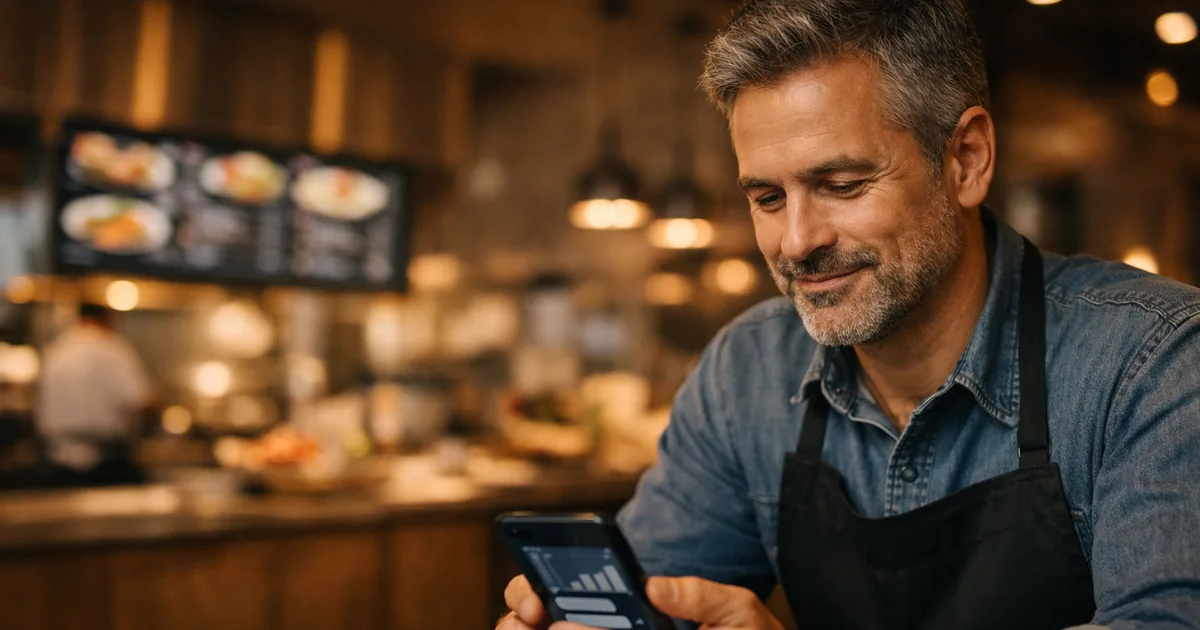
The NRA's 2026 State of the Restaurant Industry report finds 6 in 10 operators plan to invest more in customer-facing tech this year, while NRA Show 2026 exhibitors confirmed that frictionless QR table menus — no app, no account — are now the baseline guest expectation. Combined with 102 million US QR scanner users in 2026, the adoption data paints a clear picture for operators still sitting on the fence.

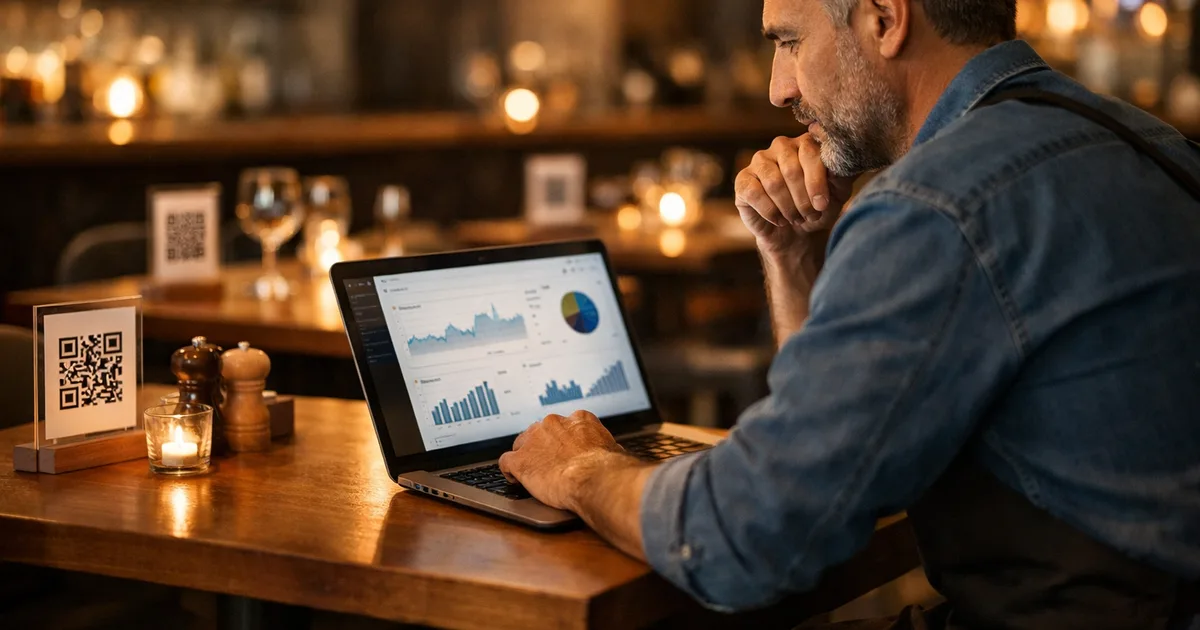
The National Restaurant Association’s State of the Restaurant Industry 2026, published in February 2026, delivers the clearest industry-wide data point yet on where digital menus stand: 8 in 10 restaurant operators now say technology gives them a competitive advantage, and 6 in 10 plan to invest more in technology to enhance the customer experience in the year ahead. The NRA surveys thousands of US operators annually; its technology chapter identifies on-premises ordering and payment technology — a category that covers QR code menus — as having delivered the single biggest operational impact over the past two to three years, ranking ahead of back-of-house automation, delivery integrations, and loyalty programs.
Three months after the report’s release, the May 2026 NRA Show in Chicago confirmed the practical implication: frictionless QR ordering — guests scan a table code, the menu opens instantly in the browser, no app to download, no account to create — was described by exhibitors and analysts as the defining baseline expectation for 2026. The conversation on the show floor had already moved past “should we have a QR menu?” to “how complete, how fast, and how well-integrated is ours?”
Key data points at a glance:
- 8 in 10 US restaurant operators say technology gives them a competitive advantage (NRA 2026)
- 6 in 10 plan to invest more in customer-facing technology in 2026 (NRA 2026)
- On-premises ordering and payment tech — including QR menus — had the biggest impact of any technology over the past 2–3 years (Restaurant Business Online)
- 26% of operators now use AI-related tools, primarily for marketing; ordering tech still leads on measurable impact (Restaurant Dive)
- 102.6 million US smartphone users scanned a QR code in 2026, up from ~89 million in 2022 (Statista)
- Frictionless browser-based QR ordering was confirmed as the guest baseline expectation at NRA Show 2026 (Restaurant Technology News)
What the NRA 2026 report actually found
The NRA’s annual State of the Restaurant Industry survey is the most comprehensive measurement of US operator sentiment and technology investment, covering thousands of operators across full-service, quick-service, and fast-casual segments. The 2026 edition’s technology chapter surfaces a striking headline that got less attention than the AI numbers: the category with the largest reported operational impact over the past two to three years was on-premises ordering and payment technology — not kitchen automation, not delivery platforms, not loyalty programs. That category includes tableside tablets, kiosk ordering, and QR code menus.
The macro framing is consistent with that finding. According to Restaurant Business Online’s reporting on the report, eight out of ten operators said technology gives them a competitive advantage — a figure that reflects how thoroughly the pandemic-era adoption of contactless ordering has embedded itself in the industry’s self-image. Six in ten said they plan to invest more in technology this year, specifically to improve the customer experience. That ratio suggests the investment cycle is still accelerating, not plateauing.
The AI data point — 26% of operators now use AI-related tools, primarily for marketing, with only 6% using it for customer orders — generated considerable trade-press coverage. The more immediately actionable number, however, is the 60% planning customer-experience tech investment this year. For most of those operators, the first dollar goes to the thing with the biggest proven impact: the ordering layer.
NRA Show 2026: frictionless QR is the new floor
The NRA Show 2026 in May at McCormick Place in Chicago is the largest annual gathering of foodservice operators and technology vendors in North America, and its show floor typically signals where operator investment is actually heading. The 2026 edition’s technology narrative was clear on QR menus: the expectation guests bring to a table in 2026 is that scanning the QR code opens the full menu directly in the browser, with no app, no account, no friction. This is no longer a premium feature that sophisticated operators offer — it is the baseline that guests now assume.
As Restaurant Technology News reported in its post-show analysis, the most compelling vendor demonstrations were not the flashiest AI tools but the ones showing operational simplification: menus that load in one tap, integrate cleanly with POS systems, allow real-time price updates, and remain reliable over a multi-year horizon. Operators were asking practical questions: does it reduce friction for the guest? Does it reduce friction for my staff? Does it actually talk to my point of sale?
The shift in the conversation matters for operators who still treat a QR menu as optional. When the industry’s flagship trade show treats frictionless digital ordering as a given rather than a differentiator, the risk calculus changes: the competitive cost of not having it now clearly outweighs the cost of implementation.
102 million US scans — and the AI-search dimension
According to Statista data, approximately 102.6 million US smartphone users scanned a QR code in 2026, up from around 89 million in 2022. Restaurant table cards consistently rank among the highest-performing QR scan contexts, alongside product packaging and retail signage — reflecting how thoroughly the format has normalized in the dining context since its pandemic-era emergency adoption.
That scale has a practical implication beyond the guest experience: the same guests who expect a QR menu are also increasingly using AI tools to choose where to eat. As we reported in June 2026, a May 2026 Uberall benchmark found that 83% of restaurant locations are entirely absent from AI-generated recommendations — even though 86% have some Google presence. The gap between having a Google listing and being recommended by ChatGPT or Gemini comes down largely to structured, machine-readable menu content.
A dynamic QR code digital menu addresses both simultaneously: it serves your in-restaurant guests with a frictionless experience and gives AI recommendation engines something to read — dish names, descriptions, allergens, ingredients, and food photography in structured form. Restaurants that still rely on printed menus or static PDFs have no comparable signal in either environment.
The adoption debate that surfaced in 2024 and 2025 — do guests actually like QR menus? — is worth reading alongside this data. Our contrarian deep-dive on restaurants ditching QR menus concludes that the complaints, while real, track to poor implementations: menus that require app downloads, render poorly on small screens, or fail to load reliably. A well-built digital menu resolves each of those objections and adds the AI-search upside.
Join the restaurants already ahead of the curve
What restaurant operators should do now
- Treat a QR menu as infrastructure, not a feature. The NRA data and NRA Show 2026 floor consensus are both clear: digital table ordering is now baseline infrastructure, like wi-fi or a POS. Getting to baseline takes priority over AI experimentation for most operators.
- Frictionless means browser-only, one tap. No app download, no account creation, no PDF. The specific expectation on the NRA Show floor in 2026 is that guests scan and the menu loads immediately in their mobile browser. Any additional step is friction that costs you orders.
- Fill in your menu content. Every dish should have a description, ingredient list, allergen tags, dietary flags, and a photograph. Incomplete menus cost you twice: guest friction in the restaurant and AI invisibility outside it. Explore AI food photography as a fast path to a visually complete menu.
- Act before the next investment cycle peaks. With 60% of operators planning to invest more in customer-facing tech this year, the market for digital-ordering infrastructure is accelerating. The operators who act now set the benchmark; the ones who wait will be catching up.
If you want to see what a frictionless QR menu looks like in practice — one that a guest can open in one tap on any smartphone, available in 16 languages for tourist-heavy venues — you can start a free ShevaFood account and have your first QR menu live before your next service. No credit card required.
Frequently Asked Questions
The National Restaurant Association’s State of the Restaurant Industry 2026 (February 2026) found that 8 in 10 operators say technology gives them a competitive advantage and 6 in 10 plan to invest more in customer-facing tech this year. On-premises ordering and payment technology — which includes QR code menus — was identified as having the biggest operational impact of any technology category over the past two to three years, ahead of kitchen automation, delivery platforms, and loyalty programs.
Approximately 102.6 million US smartphone users scanned a QR code in 2026, up from around 89 million in 2022, according to Statista data. Restaurant table QR codes rank among the highest-performing scan contexts, reflecting the normalization of the format in dining settings since its pandemic-era adoption. The figure indicates that the majority of your dining guests arrive already familiar and comfortable with scanning a QR code to view a menu.
Analysts and vendors at the May 2026 NRA Show in Chicago identified frictionless QR table ordering — guests scan, the full menu opens instantly in the browser with no app and no account required — as the new baseline guest expectation, not a differentiator. The show’s broader technology consensus was that operators who still lack this capability are now behind the competitive norm, not ahead of an emerging trend.
Yes. A dynamic QR menu puts your dish names, descriptions, allergens, ingredients, and food photography online in structured, machine-readable form — exactly the data that AI recommendation engines like ChatGPT, Gemini, and Perplexity parse when deciding which restaurants to recommend. Restaurants with rich structured digital menus are significantly more likely to appear in AI-generated results than those relying on PDFs or incomplete online listings. See our full report on AI restaurant discovery in 2026 for the supporting data.
This article draws on the National Restaurant Association’s State of the Restaurant Industry 2026 (released February 2026), NRA Show 2026 coverage from Restaurant Technology News and Kiosk Industry (May–June 2026), and Statista QR code scanning data. It will be updated as further adoption benchmarks are published.
Sources
- State of the Restaurant Industry 2026 — National Restaurant Association , February 2026
- Persistent Cost Increases and Enduring Demand Will Shape the Restaurant Industry in 2026 — National Restaurant Association / PR Newswire , February 2026
- NRA: Over 25% of restaurant operators use AI — Restaurant Dive
- What the 2026 National Restaurant Association Show Revealed About the Future of Restaurant Technology — Restaurant Technology News , June 2026
- National Restaurant Show 2026: In search of the unified tech stack — Kiosk Industry , May 2026
- Restaurants want to give customers more tech — Restaurant Business Online
Tags
Related Articles
Virginia's Updated Allergen Rules Are Live — Sesame Added and QR Codes Approved for All Food Establishments
New York Becomes First US State to Require Allergen Labels on Grab-and-Go Foods — November 12, 2026 Deadline