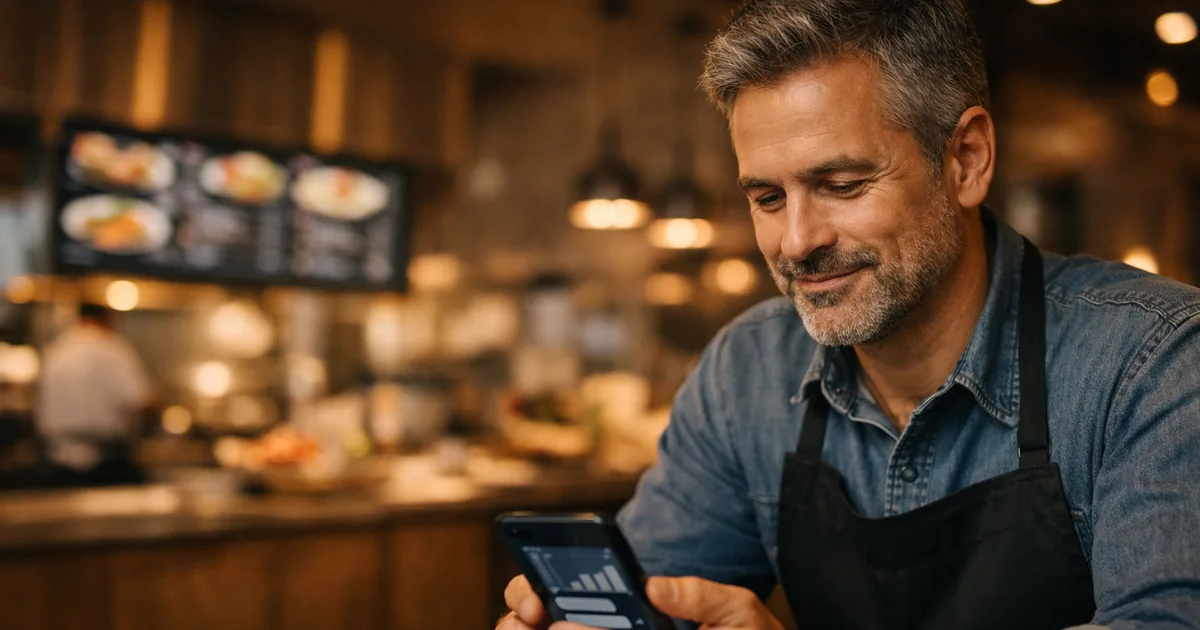
AI Restaurant Discovery in 2026: 83% of Restaurants Are Invisible to ChatGPT and Gemini
A landmark May 2026 report found that 83% of restaurants are completely absent from AI-generated recommendations despite having a Google presence. As Google rolls out AI-powered booking and 22% of diners already use ChatGPT or Gemini to pick a restaurant, menu content has become the new visibility lever.

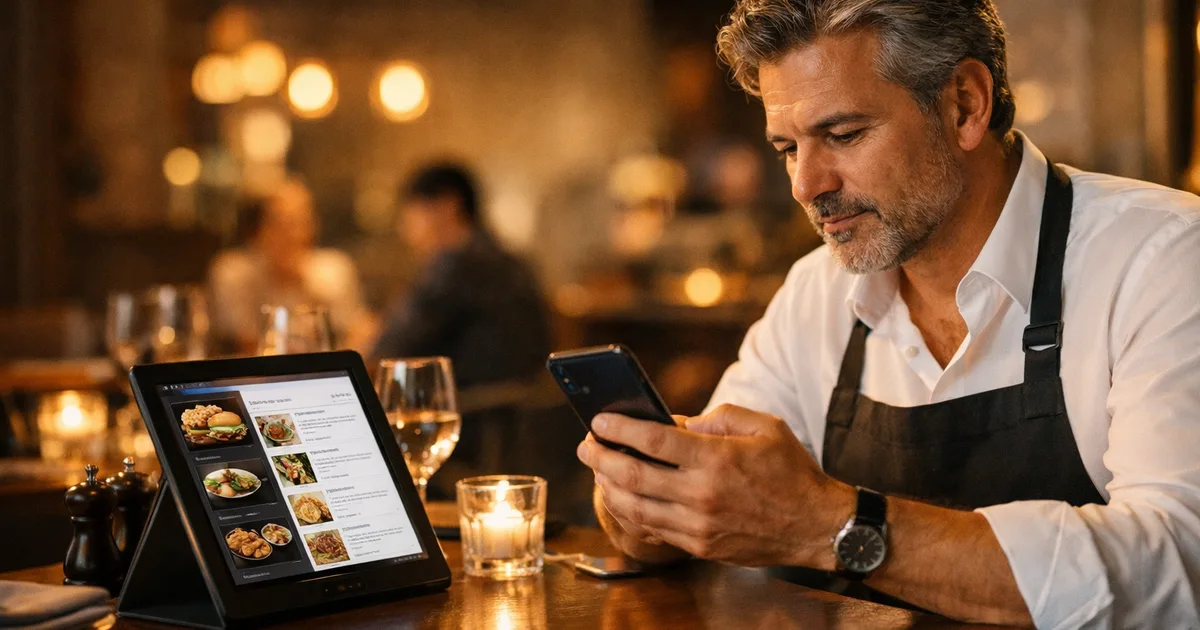
A landmark industry report published on 7 May 2026 by local-marketing platform Uberall found that 83% of restaurant locations are entirely absent from AI-generated search recommendations — even though 86% of those same restaurants maintain at least some presence on Google. The report, titled “Fast Food, Faster Discovery: The 2026 GEO Playbook for Multi-Location QSRs,” is the first industry benchmark to measure exactly how AI assistants recommend restaurants. Less than three weeks earlier, Google had announced AI-powered restaurant booking in the United Kingdom — a live signal that search is no longer just directing traffic to restaurants but completing transactions on their behalf.
The bottom line: being on Google is necessary but no longer sufficient. AI engines draw from different signals than traditional search, and most restaurants — including those with active Google profiles — give those engines nothing to work with.
Key developments at a glance:
- 83% of restaurants are invisible in AI-generated recommendations, despite 86% having some Google presence (Uberall, May 2026)
- 22% of consumers have already used ChatGPT, Gemini, or Perplexity to choose a restaurant
- Google launched AI-powered booking for restaurants in the UK in April 2026
- AI engines recommend only 3 to 5 brands per query; the top three brands per cuisine capture 53.4% of all AI share of voice
- Rating thresholds apply: ChatGPT favors 4.3+ stars, Perplexity 4.1+, Gemini 3.9+
What the Uberall report actually measured
Uberall’s benchmark is the first to test how AI assistants — not humans — recommend restaurants. The team queried ChatGPT, Gemini, and Perplexity with restaurant discovery prompts across multiple cuisines and locations, then cross-referenced results against each chain’s actual footprint and online presence. Only 17% of restaurant locations ever appeared in an AI response.
The concentration effect is striking: in burger chains, the category leader captures ten times the AI share of voice of the average brand. Across all cuisines, the top three brands per category take 53.4% of total AI mentions — leaving the other 47% split among everyone else, with most getting nothing.
Equally notable: nearly 79% of AI-generated restaurant responses are triggered by informational or comparative prompts — questions like “what’s the healthiest option near me” or “which Italian restaurant has the best atmosphere for a business dinner.” AI engines answer those questions by reading the structured content attached to each restaurant: menu descriptions, dish details, allergen tags, images, and review text. Restaurants whose digital presence amounts to a PDF menu or a bare Google listing hand AI nothing to read.
Google in April 2026: search becomes a booking agent
On 10 April 2026, Restaurant Technology News reported that Google had launched “agentic” capabilities in its AI Mode for the UK, allowing users to ask Google’s AI to handle the entire reservation process — identifying restaurants, checking availability, and confirming bookings — without leaving the Google interface. The feature represents what the company has called a shift from discovery to execution: Google no longer just points diners toward a restaurant, it completes the transaction.
For restaurateurs, this is a second-order effect of the same underlying shift. The inputs to both AI recommendations and AI-mediated bookings are structured, machine-readable data: menu content, availability via supported reservation platforms, and a reputation signal derived from structured review data. Restaurants operating with static or incomplete digital presences are at risk of being skipped in both recommendation and booking flows.
As Food on Demand noted in its November 2025 analysis, AI is transforming discovery from a browsing behavior into a delegated one — diners are increasingly handing the search task to an AI agent and accepting its first recommendation.
Why menu content is now a visibility lever
The menu is the single richest source of structured data a restaurant controls. Dish names, descriptions, ingredients, allergens, prices, dietary tags, and food photography are exactly what AI engines parse when deciding whether to include a restaurant in a recommendation. A well-structured digital menu — one that is machine-readable, kept current, and serves in multiple languages for tourist-heavy locations — functions as a continuous feed of relevant, citable content.
The Uberall data makes the risk concrete: the 83% of restaurants that are invisible share a common trait — their digital presence gives AI little to read beyond a basic name-and-address listing. By contrast, the 17% that do appear tend to have complete, structured profiles with genuine review density and rich content — including, increasingly, detailed menu information tied to their Google profile.
Restaurants that already use a QR code digital menu have a structural advantage: their menu content is online, structured, and updatable in real time. Those still relying on printed menus or static PDFs have no comparable signal for AI engines to index. The contrarian case for QR menus has a new chapter: whatever the debate about guest experience, AI-mediated discovery strongly favors restaurants with rich digital menu content.
Give AI something to read — and recommend
Four things restaurateurs should do now
- Audit your menu completeness. Every dish should have a description, ingredient list, allergen tags, dietary flags, and a photograph. Gaps are exactly where AI engines stop reading.
- Act on your star rating. The rating thresholds in the Uberall data are concrete: ChatGPT favors 4.3+ stars, Perplexity 4.1+, Gemini 3.9+. A proactive review-gathering strategy is now a discoverability strategy.
- Connect to supported booking platforms. Google’s AI booking feature in the UK routes through specific reservation integrations. Ensure yours is connected if you accept bookings.
- Think multilingual. Informational prompts in AI search often specify cuisine, atmosphere, or dietary needs rather than restaurant names. A multilingual menu that surfaces accurately for non-English queries broadens your addressable AI audience in tourist markets.
FAQ
How many restaurants are invisible in AI search in 2026?
According to Uberall’s May 2026 benchmark, 83% of restaurant locations are entirely absent from AI-generated recommendations. The same report found that 86% of those restaurants still maintain some presence on Google, proving that traditional SEO alone no longer guarantees AI visibility.
Which AI tools do diners use to choose a restaurant?
ChatGPT, Google Gemini, and Perplexity are the most cited tools. Each applies its own rating threshold: ChatGPT primarily recommends businesses with a 4.3-star average or higher, Perplexity 4.1+ stars, and Gemini 3.9+ stars, according to the Uberall 2026 GEO Playbook.
Does Google’s AI restaurant booking affect independent restaurants?
Google’s April 2026 AI booking feature launched in the UK covers restaurants connected to supported reservation platforms. Independent restaurants not connected to those platforms may be omitted from AI-mediated bookings, making an accurate and detailed digital menu presence even more important for direct discovery.
What menu content helps restaurants appear in AI recommendations?
AI engines favor complete, structured, up-to-date information: dish names, descriptions, ingredients, allergens, prices, and high-quality images. Restaurants relying only on a PDF menu or an incomplete listing give AI tools nothing to read or cite — making a dynamic, structured digital menu the baseline for AI visibility. Explore AI food photography for your menu as a first step toward a richer, more citable digital presence.
The Uberall “Fast Food, Faster Discovery” report was published on 7 May 2026 and is available via BusinessWire. The Google AI restaurant booking feature was reported by Restaurant Technology News on 10 April 2026. This article will be updated as further data on AI-mediated restaurant discovery becomes available.
Sources
- 83% of Restaurants Are Invisible in AI Search: New Uberall Report Reveals the Discovery Gap Reshaping the Quick Service Restaurant Industry — BusinessWire / Uberall , 7 May 2026
- Most QSRs 'Effectively Absent' From AI-Generated Recommendations — MediaPost , May 2026
- Google Introduces AI-Powered Restaurant Booking as Search Evolves Into Action — Restaurant Technology News , 10 April 2026
- AI Is Transforming Restaurant Discovery — Food on Demand , 5 November 2025
- AI Is Reshaping How Diners Discover Restaurants, DoorDash Study Finds — QSR Magazine
Tags
Related Articles
Virginia's Updated Allergen Rules Are Live — Sesame Added and QR Codes Approved for All Food Establishments
New York Becomes First US State to Require Allergen Labels on Grab-and-Go Foods — November 12, 2026 Deadline