Menu Management Guide: Boost Efficiency, Margins, and Guest Experience
Menu management is more than updating prices—it's a strategic lever for efficiency, margins, and guest experience. This guide shows how to use data-driven insights to make smarter menu decisions.


Ever wondered why you gravitate toward a specific dish when scanning a menu? That choice is rarely accidental. Menu engineering is the formal term for a familiar practice: the craft of shaping a menu to maximise profitability and steer customer decisions . By examining layout, dish popularity, and cost, restaurateurs can strategically refine their offerings.
In this guide, we share practical insights on harnessing menu design to drive revenue and enhance the dining experience.
Menu Engineering Definition
Menu engineering is about turning data into decisions. You look at what sells, what costs, and what guests overlook—then use layout, wording, and pricing to steer attention toward high-margin or strategic items. It blends analysis with design so your menu nudges choices instead of just listing them. Done well, it works as a sales tool, not just a catalogue.
In the following sections ahead, we’ll dive deeper into menu engineering and explore why it’s especially beneficial for restaurant and café owners
The Benefits Of Menu Engineering In Your Restaurant
A strong menu delivers more than higher sales. By investing in a clear, data-informed approach, you can boost satisfaction, retention, and brand perception.
From a strategic angle, menu management helps you highlight promotions or high-margin dishes. You can also cut food waste and ingredient costs by phasing out items that rarely sell. Many diners now care about sustainability—reducing waste supports both your bottom line and your reputation.
Visitor Statistics and Reviews Management turns this into actionable intelligence. In your Shevafood dashboard you can:
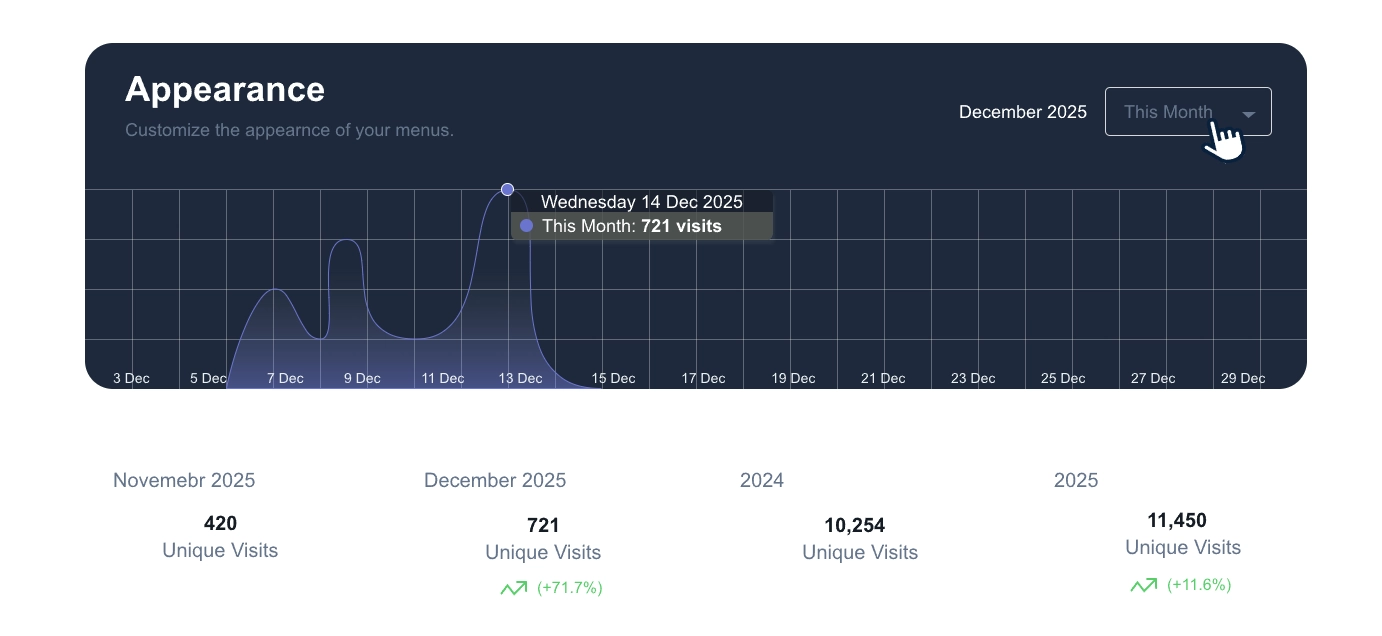
- Track Unique Visitors Per Month — See how many people view your digital menu and how engagement changes over time
- Access Annual Reports — Review year-over-year trends to plan seasonal changes and promotions
- Monitor Reviews — With Google Reviews integration, feedback flows into one place so you can spot patterns and adjust your menu accordingly
This data is strategic: it tells you which dishes attract interest, when traffic peaks, and what guests say about your offering. Built-in visitor analytics, real-time updates, and multilingual menus let you act on that information quickly.
Menu Management: The Key Principles
To get the most from menu management, follow a structured approach so you can measure the impact of your changes.
Menu Analysis
Take a close look at your current performance. Use your POS, booking history, and visitor analytics to understand which items sell, which cost the most, and which sit untouched. Metrics like dish popularity and spend per guest reveal winners and underperformers.
Concept Development
Revisiting your menu is a chance to sharpen your concept. With data and market insights, you can refine what you stand for and build a menu that reinforces your brand. A clear concept makes it easier to add, remove, or reposition dishes with purpose.
Menu Pricing
Re-evaluate your pricing strategy. Aim for a balance that feels fair to guests while protecting margins. Consider your target audience, ingredient costs, and how you want to position each category (starters, mains, desserts).
Menu Design
Ensure your menu is easy to read and visually aligned with your brand. Layout, typography, and imagery influence what guests notice first. A clean, consistent design supports both usability and perception of value.
Effective Strategies For Optimising Your Restaurant Menu
With the basics in place, these tactics help you get more from your menu:
-
Appropriate Portions, Reasonable Prices. Size and price both shape how diners perceive value. Aim for portions that feel generous and prices that feel fair, without undercutting either so far that you erode margins or disappoint expectations.
-
The Power Of Words. Compare “grilled chicken” with “herb-marinated chicken breast, charred and served with roasted vegetables.” The second sells. Strong, sensory descriptions nudge diners toward dishes, so give each item copy that makes it irresistible.
-
Visual Presentation. Layout, typography, and photos shape how guests experience your menu before they order. Match the look to your brand and keep it scannable, whether on paper or on screen.
Put Your Menu To Work With Shevafood
Let your menu lead the way by putting it where guests can find it. Shevafood brings visitor analytics, real-time updates, multilingual menus, and Google Reviews into one place, so you can refine your offering based on what people actually view, click, and say.
Add and update menus in minutes, with designs that match your brand.